What's Actually In Your Bread
Since 1998, every slice of enriched bread in America contains synthetic folic acid. The policy saved thousands of babies. It also created a problem nobody talks about.

Justin Angeles
· 4 min read
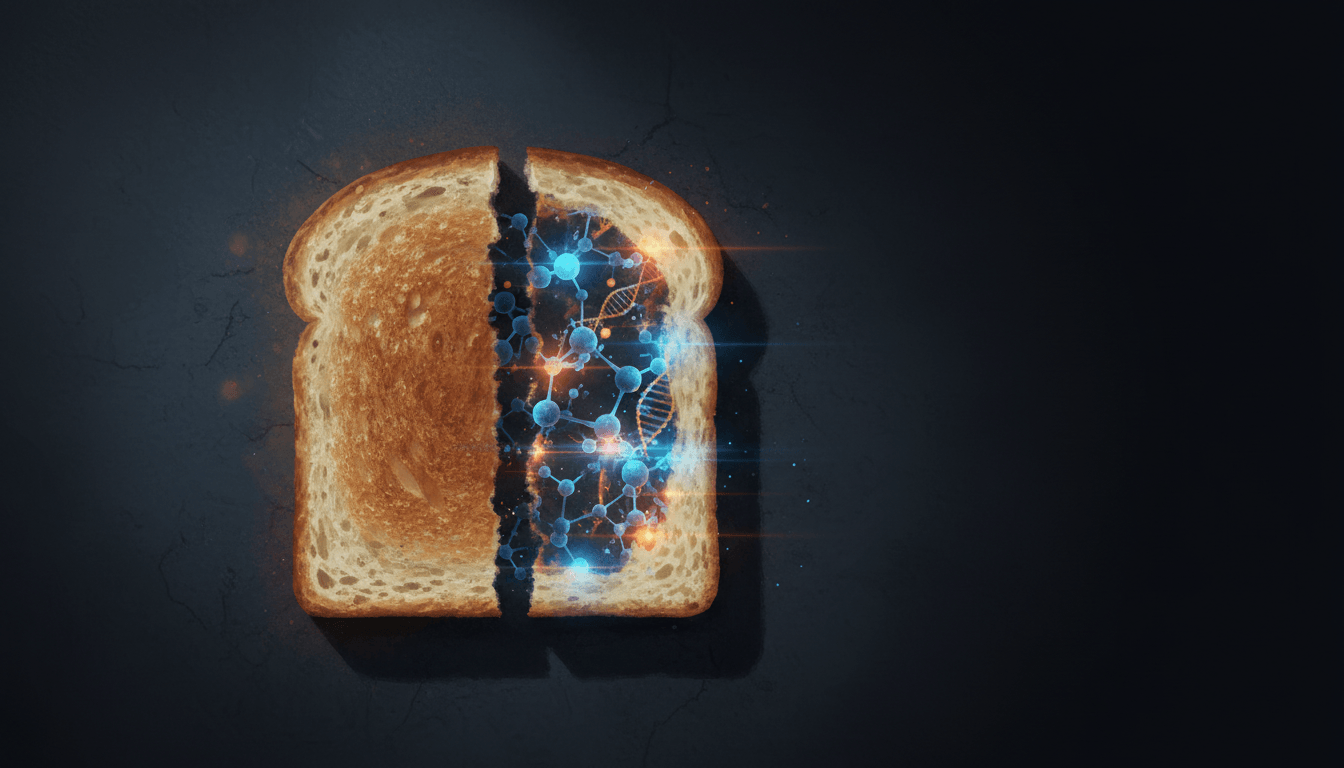
On January 1, 1998, the FDA quietly changed the American food supply. Every manufacturer producing enriched grain products (bread, pasta, flour, cereal, rice) was now required by law to add synthetic folic acid. Not optional. Not suggested. Required.
You've been eating it every day since.
If you've ever glanced at the ingredients on a bag of bread and seen "enriched flour," you were looking at a chemistry experiment you never signed up for. The word "enriched" means the original nutrients were stripped out during processing and then added back in synthetic form. The specific additions: folic acid (synthetic vitamin B9), reduced iron or ferrous sulfate, thiamin mononitrate (B1), riboflavin (B2), and niacin (B3).
"Fortified" is different. That means nutrients that were never there in the first place got added. Folic acid in flour is technically fortification, but the FDA uses "enriched" on the label because the other nutrients are being replaced. The distinction matters. One is restoration. The other is intervention.
The folic acid part was the intervention.
The Problem It Solved
Folic acid is the synthetic version of folate, a B vitamin that's critical during the earliest weeks of pregnancy. We're talking about the window when the neural tube forms. That tube becomes the brain and spinal cord. When folate levels are too low during that window, the tube doesn't close properly. The result is a neural tube defect (NTD): spina bifida, anencephaly, or other conditions that range from severe disability to incompatible with life.
The cruel part: this window is 21 to 28 days after conception. Most women don't even know they're pregnant yet. By the time you're buying a pregnancy test, the neural tube is already formed.
That's why the FDA didn't just recommend supplements. They put it in the food supply. You can't rely on women taking a pill before they know they need one.
And it worked. CDC data showed neural tube defects dropped approximately 28% after mandatory fortification began. Thousands of cases of spina bifida and anencephaly prevented. As a public health move, it was one of the most effective interventions in modern history.
That's where most conversations about folic acid stop.
The Part Nobody Mentions
The policy was designed for women of childbearing age. Roughly 60 million people. But enriched grains are in everything. Bread, tortillas, pasta, cereal, crackers, pizza crust, hamburger buns. The entire population of 330 million Americans started consuming synthetic folic acid whether they needed it or not.
The average American now takes in approximately 140 to 300 micrograms of synthetic folic acid per day from fortified foods alone. That's before supplements. Before the multivitamin. Before the "100% Daily Value of Folic Acid!" printed on your breakfast cereal box.
Some people handle this fine. Their bodies convert synthetic folic acid into methylfolate (the form your cells actually use) and everything proceeds as intended.
But up to 60% of the population carries genetic variants in the MTHFR gene that reduce their ability to make that conversion. The CDC acknowledges this directly. If you have one copy of the C677T variant, your conversion efficiency drops by about 35%. Two copies? Down roughly 70%.
The folic acid doesn't just disappear. It accumulates. Unmetabolized folic acid (UMFA) circulates in the bloodstream, and research published in PMC has linked elevated UMFA levels to immune dysregulation and other downstream effects that scientists are still cataloging.
A Whole Country on One Protocol
Other countries watched this play out. Canada followed suit. Chile mandated fortification. Australia came on board. But the UK debated it for years and ultimately didn't mandate. Some European countries still haven't. Their reasoning wasn't that folic acid is dangerous. It's that blanket fortification is a population-wide intervention for a problem that affects a subset of that population, and the long-term consequences of chronic synthetic folic acid exposure aren't fully understood.
That's not anti-science. That's a different risk calculation.
I think about this as a software developer. It's like pushing a code change to production that fixes a critical bug for 2% of users but modifies the runtime environment for 100% of them. You'd want to know what the side effects are before you deploy. You'd want monitoring. You'd want a rollback plan.
We deployed this to 330 million people with no rollback plan. No monitoring for the people whose methylation pathways can't process what we gave them.
What Methylation Actually Does
That methylation pathway matters because it's not just about processing B vitamins. Methylation is a biochemical cycle that controls DNA repair, neurotransmitter production, detoxification, and gene expression. When it's running properly, your cells can make serotonin, dopamine, and norepinephrine. Your DNA can fix itself. Your homocysteine levels stay in check.
When it's not running properly, those systems slow down. Homocysteine builds up. Bhatia and Singh's 2015 review in Fundamental & Clinical Pharmacology outlined how elevated homocysteine becomes directly neurotoxic, damaging the blood-brain barrier and promoting neuroinflammation. Miller's 2008 review in Alternative Medicine Review connected folate metabolism disruption to impaired neurotransmitter synthesis and depression through this exact pathway.
Your bread is fortified. Your methylation cycle might not be converting any of it. And most doctors don't test for it.
That gap between what's in your food and what your body can actually use is where the rest of this series lives. The downstream effects show up in places you wouldn't expect: your mood, your memory, the physical structure of your brain.
But first you have to understand that the bread was changed. And nobody asked you.
This is Part 1 of The Methylation Gap series. Next: Your Body is Contaminated by the Vitamin In Your Bread.
Sources
- CDC: MTHFR Gene Variant and Folic Acid Facts (opens in new tab)
- Miller AL. "The methylation, neurotransmitter, and antioxidant connections between folate and depression" (2008, Alternative Medicine Review) (opens in new tab)
- Bhatia P, Singh N. "Homocysteine excess: delineating the possible mechanism of neurotoxicity and depression" (2015, Fundamental & Clinical Pharmacology) (opens in new tab)
- Adverse Effects of Excessive Folic Acid (2025, PMC) (opens in new tab)