The Night Shift Problem: When Work Breaks the Clock
The WHO classified night shift work as a probable carcinogen in 2007. The science behind that decision is worse than you think.

Justin Angeles
· 8 min read
In 2007, the World Health Organization declared that working the night shift probably causes cancer.
Not "might contribute to." Not "is associated with in some populations." The International Agency for Research on Cancer classified shift work involving circadian disruption as a Group 2A probable human carcinogen. Same category as anabolic steroids and hot beverages above 65°C. They reviewed the evidence again in 2019 and reaffirmed the classification.
The strongest evidence came from nurses. Eva Schernhammer at Harvard published a study in 2001 in the Journal of the National Cancer Institute using data from the Nurses' Health Study, one of the largest and longest-running cohort studies ever conducted. Nurses who worked rotating night shifts for 30 or more years had a 36% increased risk of breast cancer compared to those who never worked nights.
Thirty-six percent. From a work schedule.
What Happens Inside
The metabolic damage is even more immediate than the cancer risk.
Frank Scheer at Harvard's Brigham and Women's Hospital designed one of the cleanest experiments in circadian science. In a 2009 PNAS study, his team put healthy subjects on a 28-hour "day" inside a controlled laboratory. No windows. No time cues. The 28-hour cycle forced participants to eat and sleep at every circadian phase over 10 days.
This wasn't sleep deprivation. Subjects got the same amount of sleep. The only variable was when they slept and ate relative to their internal clock.
The results showed up in days. Glucose levels rose to prediabetic ranges. Leptin, the hormone that tells you you're full, dropped 17%. Blood pressure increased. The normal cortisol rhythm flipped. Healthy young adults started showing metabolic profiles that looked like early-stage disease.
All from timing alone.
The foundational circadian research explains why. In 1972, Robert Moore and Victor Eichler showed that lesioning the suprachiasmatic nucleus in rats destroyed the normal rhythm of adrenal corticosterone. That same year, Friedrich Stephan and Irving Zucker demonstrated that the same brain region controlled circadian rhythms in drinking and locomotor activity. The SCN is the master clock. But as Satchidananda Panda's lab showed in a 2002 Cell study, roughly 10% of the genome cycles on a circadian rhythm. The clock isn't just in your brain. It's in every organ. And Stokkan and colleagues demonstrated in 2001 in Science that you can reset the liver clock independently just by changing when you eat.
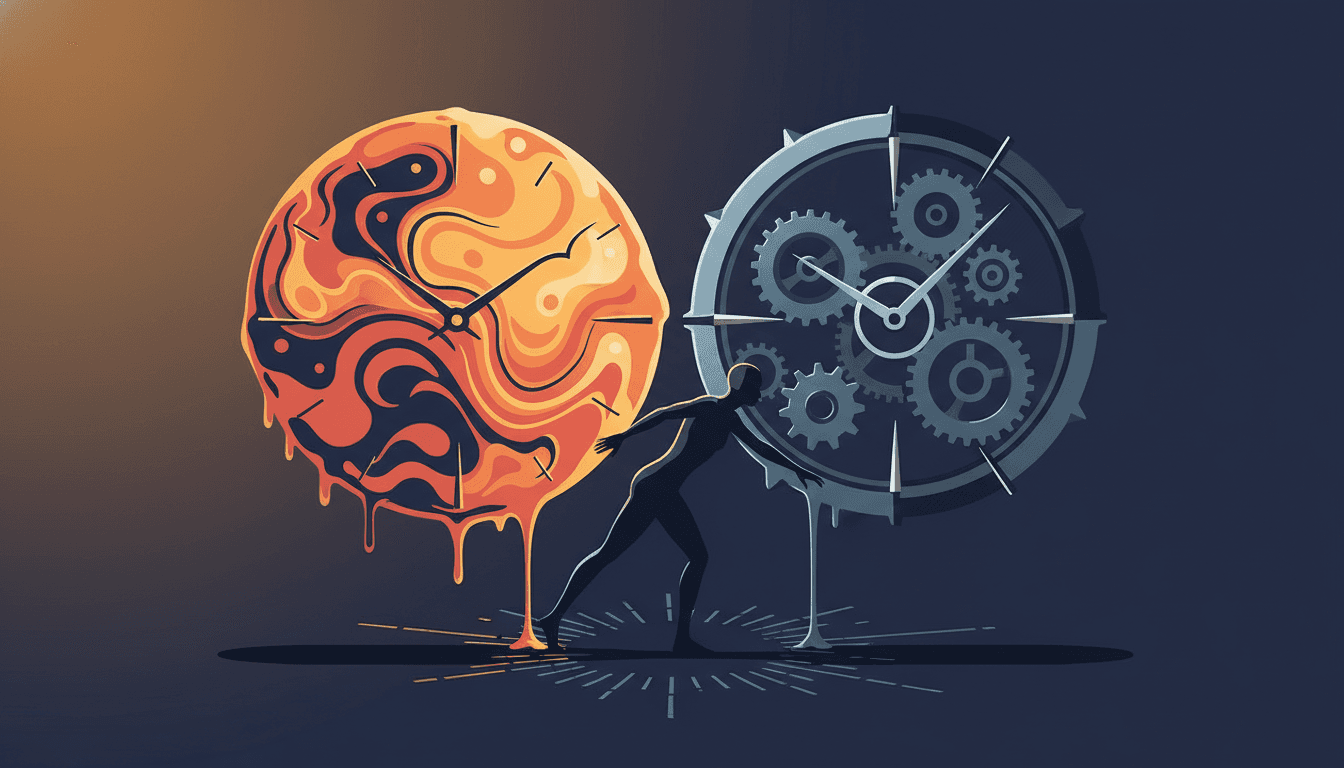
So when a night shift worker eats lunch at 3am, their liver clock drifts away from their brain clock. Their muscle clock runs on a different schedule than their pancreas. The billion-clock system described in earlier articles in this series stops being a system at all. It becomes a collection of clocks showing different times.
The Scale Nobody Talks About
Approximately 15-20% of workers in industrialized nations do some form of shift work. That's not a niche population. That's roughly one in six working adults.
Yong Gan and colleagues published a meta-analysis in Occupational and Environmental Medicine analyzing 21 studies with over 170,000 participants. Shift workers had a 42% increased risk of type 2 diabetes compared to day workers. The dose-response curve was linear and unforgiving. Every 5 years of shift work increased diabetes risk by an additional 5%.
This doesn't account for the cardiovascular damage, the mood disorders, or the cognitive decline. Lyall and colleagues published a 2018 study in The Lancet Psychiatry using UK Biobank data from over 91,000 people. Disrupted circadian rhythmicity was associated with greater mood instability, higher neuroticism scores, more loneliness, lower happiness, and worse cognitive function. The association held after controlling for age, sex, education, BMI, and a long list of confounders.
Catherine McClung published a review in 2007 in Pharmacology & Therapeutics mapping the direct connections between circadian gene disruption and mood disorders. The same molecular gears that keep your cells on time, the CLOCK/BMAL1 loop and its feedback mechanisms, also regulate dopamine and serotonin pathways. Break the clock, break the mood chemistry.
The Adaptation Myth
Night shift workers almost never adapt.
Till Roenneberg, author of Internal Time, has spent decades studying chronotypes and social jet lag. He's documented a pattern that most shift workers know intuitively but that policy makers ignore. On days off, night shift workers revert to daytime schedules. They see family. They run errands. They live in a daytime world.
Then Monday night comes and they flip back.
Simon Folkard and Philip Tucker found in 2014 that even permanent night shift workers, people who work nights every week with no rotation, achieve full circadian adaptation only about 3% of the time. Three percent. The body's master clock evolved to follow the sun. Satoshi Hattar's 2002 discovery of melanopsin-containing retinal ganglion cells showed exactly how. These specialized cells in your eyes detect blue light and send signals directly to the SCN, resetting it every morning. Charles Czeisler had already shown in 1986 that bright light alone could reset the human circadian pacemaker independent of sleep timing.
Your eyes are wired to tell your brain what time it is. A night shift worker driving home at 7am gets blasted with the strongest circadian reset signal in nature. Every morning commute undoes whatever adaptation happened during the shift.
The clocks are fighting a war they can never win.
What Actually Helps
The evidence points to a few interventions that move the needle, even if they can't eliminate the problem.
Celine Vetter and colleagues published a 2015 study in Current Biology showing that aligning shift schedules with workers' natural chronotypes, letting night owls work later shifts and morning types work earlier ones, significantly improved sleep and reduced circadian disruption. Not everyone can choose their schedule. But the ones who could showed measurable improvements.
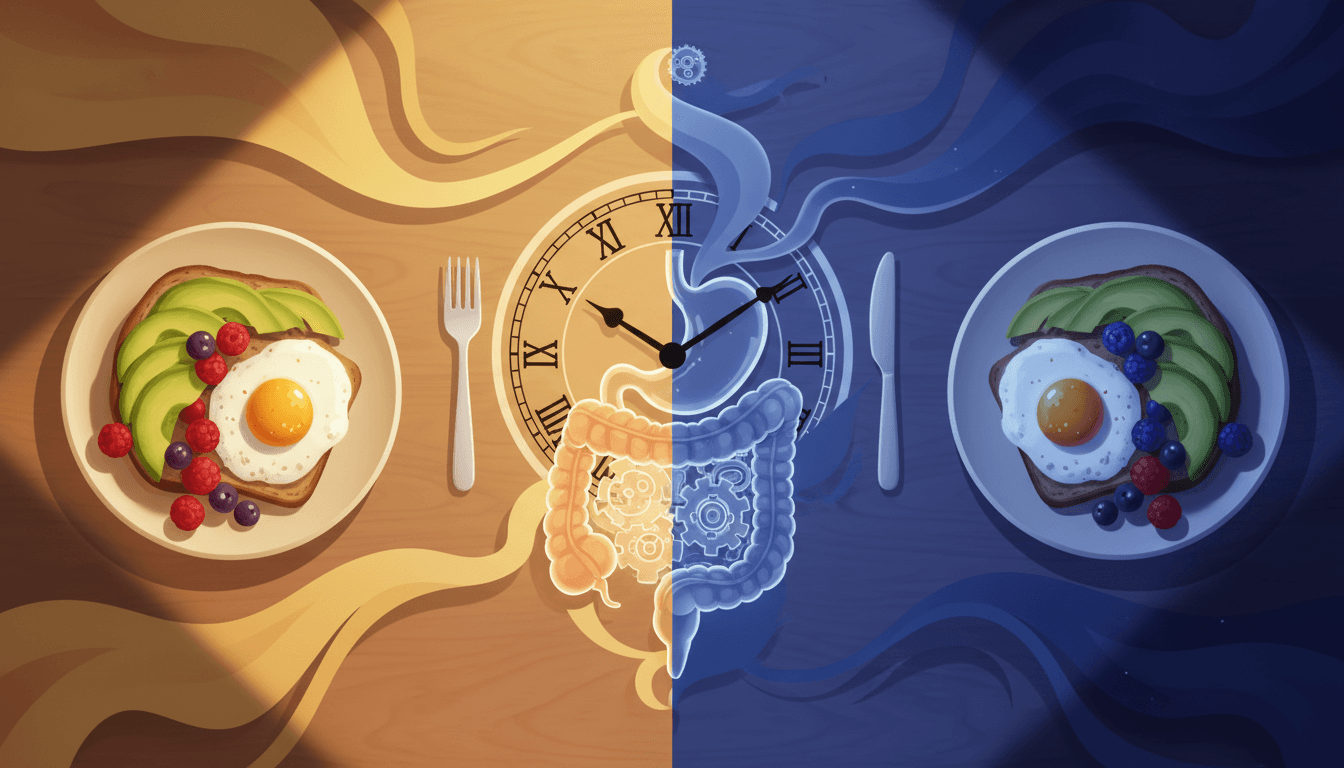
Meal timing matters independently of sleep. Hatori and Panda's lab published a 2012 study in Cell Metabolism showing that time-restricted feeding prevented metabolic disease in mice eating a high-fat diet. The calories were the same. The timing was different. Gill and Panda followed up in 2015 with a human study published in Cell Metabolism using a smartphone app to track eating patterns. Most people ate across a 15-hour window. When overweight participants restricted eating to a 10-11 hour window, they lost weight, slept better, and reported more energy. No calorie counting.
Daniela Jakubowicz published a 2013 study in Obesity showing that front-loading calories to breakfast versus dinner produced significantly more weight loss in overweight women on identical total calories. Your metabolism handles food differently at different times. Eating your biggest meal when your metabolic clock expects sleep is fighting your own biology.
And then there's light. Kenneth Wright at the University of Colorado published a 2013 study in Current Biology sending participants camping for a week with no artificial light. Their melatonin onset shifted nearly two hours earlier, and the natural light-dark cycle synchronized circadian rhythms across the group regardless of their usual chronotype. Francesco Benedetti has published multiple studies showing that morning bright light treatment accelerates antidepressant response. A 2003 study in the Journal of Clinical Psychiatry found it hastened the effect of citalopram. His work on chronotherapeutics for bipolar depression suggests that fixing the clock can fix the mood.
Coffee Machines in Break Rooms
I write code for a living. I've never worked a night shift. But I've done the thing where you code until 3am, eat garbage at midnight, sleep until noon, and wonder why you feel terrible for three days afterward. That's a voluntary, temporary version of what shift workers endure permanently.
The difference is I can stop. A nurse, a factory worker, a trucker, a pilot can't just decide to be diurnal.
About 20% of the workforce has a schedule that actively causes disease, and the institutional response has been mostly limited to coffee machines in break rooms.
The genome-wide association study by Jones and colleagues in 2019 in Nature Communications identified over 350 genetic loci associated with chronotype preferences across nearly 700,000 people. Some people are genuinely wired for later schedules. School start time research backs this up. Kyla Wahlstrom's 2014 University of Minnesota study and Gideon Dunster's 2018 Science Advances study both showed that later school start times led to more sleep, better grades, and improved health in adolescents.
We already have the evidence that aligning schedules with biology works. We've known since Moore and Eichler's 1972 lesion studies that the circadian system is fundamental to physiology, not optional. Every decade adds more data confirming what the biology already told us.
The question was never whether shift work breaks the clock. The question is what we're willing to do about it.
Sources
- Rotating Night Shifts and Risk of Breast Cancer in Women Participating in the Nurses' Health Study (Schernhammer et al., 2001, JNCI) (opens in new tab)
- Carcinogenicity of Night Shift Work (IARC Monographs, 2019, The Lancet Oncology) (opens in new tab)
- Adverse Metabolic and Cardiovascular Consequences of Circadian Misalignment (Scheer et al., 2009, PNAS) (opens in new tab)
- Shift Work and Diabetes Mellitus: A Meta-Analysis of Observational Studies (Gan et al., 2015, Occupational and Environmental Medicine) (opens in new tab)
- Loss of a Circadian Adrenal Corticosterone Rhythm Following Suprachiasmatic Lesions in the Rat (Moore & Eichler, 1972, Brain Research) (opens in new tab)
- Circadian Rhythms in Drinking Behavior and Locomotor Activity of Rats Are Eliminated by Hypothalamic Lesions (Stephan & Zucker, 1972, PNAS) (opens in new tab)
- Coordinated Transcription of Key Pathways in the Mouse by the Circadian Clock (Panda et al., 2002, Cell) (opens in new tab)
- Entrainment of the Circadian Clock in the Liver by Feeding (Stokkan et al., 2001, Science) (opens in new tab)
- Melanopsin-Containing Retinal Ganglion Cells (Hattar et al., 2002, Science) (opens in new tab)
- Bright Light Resets the Human Circadian Pacemaker Independent of the Timing of the Sleep-Wake Cycle (Czeisler et al., 1986, Science) (opens in new tab)
- Association of Disrupted Circadian Rhythmicity with Mood Disorders (Lyall et al., 2018, The Lancet Psychiatry) (opens in new tab)
- Circadian Genes, Rhythms and the Biology of Mood Disorders (McClung, 2007, Pharmacology & Therapeutics) (opens in new tab)
- Aligning Work and Circadian Time in Shift Workers Improves Sleep and Reduces Circadian Disruption (Vetter et al., 2015, Current Biology) (opens in new tab)
- Time-Restricted Feeding without Reducing Caloric Intake Prevents Metabolic Diseases in Mice (Hatori et al., 2012, Cell Metabolism) (opens in new tab)
- A Smartphone App Reveals Erratic Diurnal Eating Patterns in Humans (Gill & Panda, 2015, Cell Metabolism) (opens in new tab)
- High Caloric Intake at Breakfast vs. Dinner Differentially Influences Weight Loss (Jakubowicz et al., 2013, Obesity) (opens in new tab)
- Entrainment of the Human Circadian Clock to the Natural Light-Dark Cycle (Wright et al., 2013, Current Biology) (opens in new tab)
- Morning Light Treatment Hastens the Antidepressant Effect of Citalopram (Benedetti et al., 2003, Journal of Clinical Psychiatry) (opens in new tab)
- Genome-Wide Association Analyses of Chronotype (Jones et al., 2019, Nature Communications) (opens in new tab)
- Examining the Impact of Later High School Start Times (Wahlstrom et al., 2014, University of Minnesota) (opens in new tab)
- Sleepmore in Seattle: Later School Start Times Are Associated with More Sleep (Dunster et al., 2018, Science Advances) (opens in new tab)
- Social Jetlag and Obesity (Roenneberg et al., 2012, Current Biology) (opens in new tab)
- Roenneberg T. Internal Time: Chronotypes, Social Jet Lag, and Why You're So Tired (2012, Harvard University Press)
- Panda S. The Circadian Code (2018, Rodale Books)
Part of the Body Clock series. Previous: Light Is a Drug You Take Through Your Eyes. Next: Your Alarm Clock Is Giving You Jet Lag.