Teaching People Their Pain Away
A single neuroscience lecture can reduce chronic pain. Not drugs, not surgery. An explanation.

Justin Angeles
· 7 min read
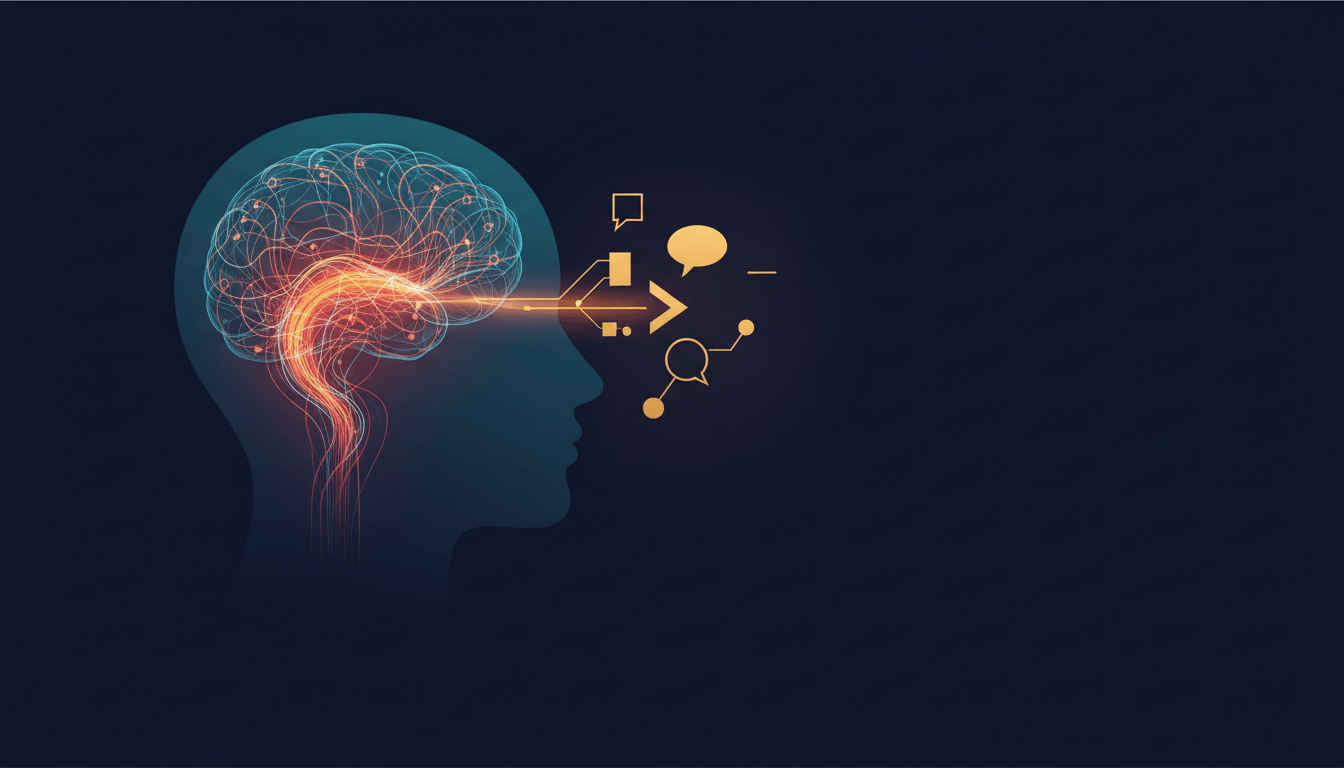
Lorimer Moseley walks into a room full of chronic pain patients and talks to them for an hour. He explains how pain works. He draws diagrams. He tells stories. He doesn't touch anyone. He doesn't prescribe anything. He doesn't adjust a spine or inject a joint.
And the pain goes down.
This is not a metaphor or a feel-good anecdote. Moseley's 2004 study in the European Journal of Pain measured it. A single session of what's now called Pain Neuroscience Education reduced pain, improved physical function, and changed how chronic low back pain patients thought about their bodies. A follow-up in 2005 found the same approach reduced catastrophizing, improved physical performance on straight leg raise tests, and actually changed brain activation patterns during movement.
One lecture. Measurable brain changes.
The intervention is almost comically simple. You explain to patients that pain is an output of the brain, not an input from the body. You tell them their nervous system has become overprotective. You show them that hurt does not equal harm. You teach them the same neuroscience this series has been building toward for nine articles.
And it works.
The Evidence Is Not Subtle
Adrian Louw and colleagues published a systematic review in 2011 in the Archives of Physical Medicine and Rehabilitation. They analyzed PNE across multiple chronic pain conditions. The pattern was consistent. Pain ratings dropped. Catastrophizing dropped. Physical function improved. Healthcare utilization decreased.
That last one matters. Patients who understood their pain was a brain prediction rather than a tissue report made different choices. They moved more. They feared less. They stopped seeking MRIs and surgeries for problems that weren't structural. They stopped feeding the cycle.
Think about what that means. A significant chunk of chronic pain treatment, the imaging, the injections, the procedures, exists because patients and doctors share a wrong model of how pain works. Fix the model, and the demand for interventions drops.
Jo Nijs and colleagues at Vrije Universiteit Brussel proposed combining PNE with cognition-targeted motor control training in a 2014 paper in Physical Therapy. The idea was straightforward. First, teach people why movement is safe. Then get them moving. The combination outperformed either approach alone. Puentedura and Louw made the same argument in 2012 in The Journal of Manual & Manipulative Therapy, calling for PNE to become standard practice in physical therapy.
Understanding plus movement. That's the protocol.
Why Words Change Biology
If you've followed this series, the mechanism is obvious. Pain is a prediction. Predictions are built from beliefs, context, and prior experience. Change the beliefs, change the prediction.
A patient who thinks "my back is damaged" has a brain running a threat model that says movement equals danger. Every bend, every lift, every twist triggers the alarm. Not because tissue is being harmed. Because the prediction says it should hurt. And predictions are self-fulfilling. The pain is real. The damage is not.
Melzack and Wall proposed the gate control theory back in 1965 in Science, showing that pain signals could be modulated before they reached consciousness. Melzack expanded this in 1990 with the neuromatrix model, arguing pain was generated by a distributed brain network, not passively received from the body. The IASP finally caught up in 2020, revising the official definition of pain to acknowledge it as a personal experience not necessarily linked to tissue damage.
PNE is the clinical application of all of this. You're not tricking patients. You're giving them an accurate model to replace an inaccurate one.
The inaccurate model says: pain means damage, rest until it stops, avoid what hurts.
The accurate model says: pain means your brain perceives threat, movement is usually safe, avoidance makes it worse.
The Catastrophizing Connection
Michael Sullivan's 1995 framework on pain catastrophizing described three components: rumination (I can't stop thinking about the pain), magnification (something terrible is happening), and helplessness (there's nothing I can do). Edwards and colleagues showed in 2009 in Arthritis and Rheumatism that catastrophizing predicted pain intensity in arthritis and fibromyalgia patients better than the actual state of their joints.
Seminowicz and Davis found in 2006 that high catastrophizers showed amplified cortical responses to identical painful stimuli. Same input, different brain, different experience. The pain wasn't in their joints. It was in their predictions.
PNE directly attacks catastrophizing by replacing the catastrophic narrative with an accurate one. "My spine is crumbling" becomes "my nervous system is sensitized." "I'll never get better" becomes "neural pathways can be retrained." The shift isn't positive thinking. It's correct thinking.
Apkarian and colleagues showed in 2004 in the Journal of Neuroscience that chronic back pain was associated with decreased gray matter in the prefrontal cortex and thalamus. Baliki's team found in 2012 in Nature Neuroscience that corticostriatal connectivity predicted which acute pain patients would develop chronic pain. The brain changes that maintain chronic pain are real and measurable. But Moseley's work shows those changes can reverse. The brain that learned to amplify pain can learn to quiet it.
What This Looks Like in Practice
Irene Tracey at Oxford, one of the leading pain neuroimagers, has described the brain's pain system as a "salience detector" rather than a damage detector. Her 2019 work in Cerebral Cortex mapped how context, expectation, and attention modulate pain processing in real time. The brain is constantly asking "how dangerous is this?" and assembling an answer from everything it knows.
PNE changes what the brain knows.
Benedetti's research on nocebo effects showed the reverse process. His 2007 paper demonstrated that words alone could increase pain. Lang and colleagues found in 2005 that the specific language healthcare providers used during procedures changed patients' pain ratings. Words like "this will sting" and "you'll feel a big bee sting" increased pain. Neutral language didn't.
If words can make pain worse, words can make pain better. Not because pain is imaginary. Because pain is constructed, and language is one of the building materials.
Refactor the Model
I build software. When a system has a bug, the first instinct is to add a patch. Add error handling. Add a workaround. Add complexity on top of complexity until the original problem is buried under layers of fixes.
Sometimes the right move is to go back to the source and fix the model. Rewrite the logic. Make the system understand its own inputs correctly. Everything downstream gets cleaner.
PNE is that refactor for chronic pain. It doesn't add another treatment on top of the pile. It corrects the underlying model that generates the problem. And when the model is correct, the system behaves differently without needing to be forced.
The catch is that understanding alone isn't enough. Moseley and every researcher in this space emphasizes that PNE works best combined with graded exposure and movement. You can't just know that movement is safe. You have to prove it to your nervous system by moving. Repeatedly. Gradually. Until the prediction updates.
Knowledge changes the story. Movement changes the prediction. Together, they change the pain.
The pain was never a lie. It was an honest guess from a system working with bad information. Give it better information, and it makes a better guess.
Sources
- Pain Mechanisms: A New Theory (Melzack & Wall, 1965, Science) (opens in new tab)
- Phantom limbs and the concept of a neuromatrix (Melzack, 1990, Trends in Neurosciences) (opens in new tab)
- Evidence for a direct relationship between cognitive and physical change during an education intervention in people with chronic low back pain (Moseley, 2004, European Journal of Pain) (opens in new tab)
- The effect of neuroscience education on pain, disability, anxiety, and stress in chronic musculoskeletal pain (Louw et al., 2011, Archives of Physical Medicine and Rehabilitation) (opens in new tab)
- Chronic Back Pain Is Associated with Decreased Prefrontal and Thalamic Gray Matter Density (Apkarian et al., 2004, Journal of Neuroscience) (opens in new tab)
- Corticostriatal functional connectivity predicts transition to chronic back pain (Baliki et al., 2012, Nature Neuroscience) (opens in new tab)
- Theoretical perspectives on the relation between catastrophizing and pain (Sullivan et al., 1995, Clinical Journal of Pain) (opens in new tab)
- Catastrophizing and pain in arthritis, fibromyalgia, and other rheumatic diseases (Edwards et al., 2009, Arthritis and Rheumatism) (opens in new tab)
- Cortical responses to pain in healthy individuals depends on pain catastrophizing (Seminowicz & Davis, 2006, Pain) (opens in new tab)
- When words are painful: Unraveling the mechanisms of the nocebo effect (Benedetti et al., 2007, Neuroscience) (opens in new tab)
- Can words hurt? Patient-provider interactions during invasive procedures (Lang et al., 2005, Pain) (opens in new tab)
- A Modern Neuroscience Approach to Chronic Spinal Pain (Nijs et al., 2014, Physical Therapy) (opens in new tab)
- Finding the Hurt in Pain (Tracey, 2019, Cerebral Cortex) (opens in new tab)
- IASP Revised Definition of Pain (2020) (opens in new tab)
Part of the Pain Illusion series. Previous: Your Brain Has a Volume Knob for Pain. Next: The Best Painkiller Is the One That Hurts.