Debugging the Pain Program
For 41 years, the official definition of pain was wrong. The fix points to a future where we treat chronic pain by rewriting the brain's predictions, not replacing body parts.

Justin Angeles
· 8 min read
In 2020, the International Association for the Study of Pain changed its definition of pain for the first time in 41 years. The old definition, written in 1979, described pain as an experience associated with actual or potential tissue damage. The new one added three words that took decades of research to earn. "Or resembling that associated with."
Those three words are a paradigm shift disguised as a grammar edit.
They mean the world's leading pain authority now officially recognizes what this entire series has been building toward. Pain doesn't require damage. Pain doesn't require a body part. Pain doesn't even require a stimulus. Pain is something the brain constructs. And the brain can construct it wrong.
Eleven articles converge here. Melzack and Wall's 1965 gate theory. Ramachandran's mirror box tricking phantom limbs out of agony with a $5 piece of glass. Moseley's 2002 placebo knee surgeries that worked as well as the real thing. Eisenberger's 2003 fMRI scans showing social rejection lighting up the same circuits as a broken bone. Benedetti's nocebo research proving words alone can generate measurable pain.
Every finding points to the same conclusion. Pain is not a signal your body sends to your brain. Pain is a prediction your brain generates to protect you.
The question now is what we do with that knowledge.
The Stuck Prediction
Predictive processing researchers like Mick Thacker at King's College London frame chronic pain as a "stuck prior." Your brain made a prediction that you were in danger. It generated pain to protect you. Then it got stuck.
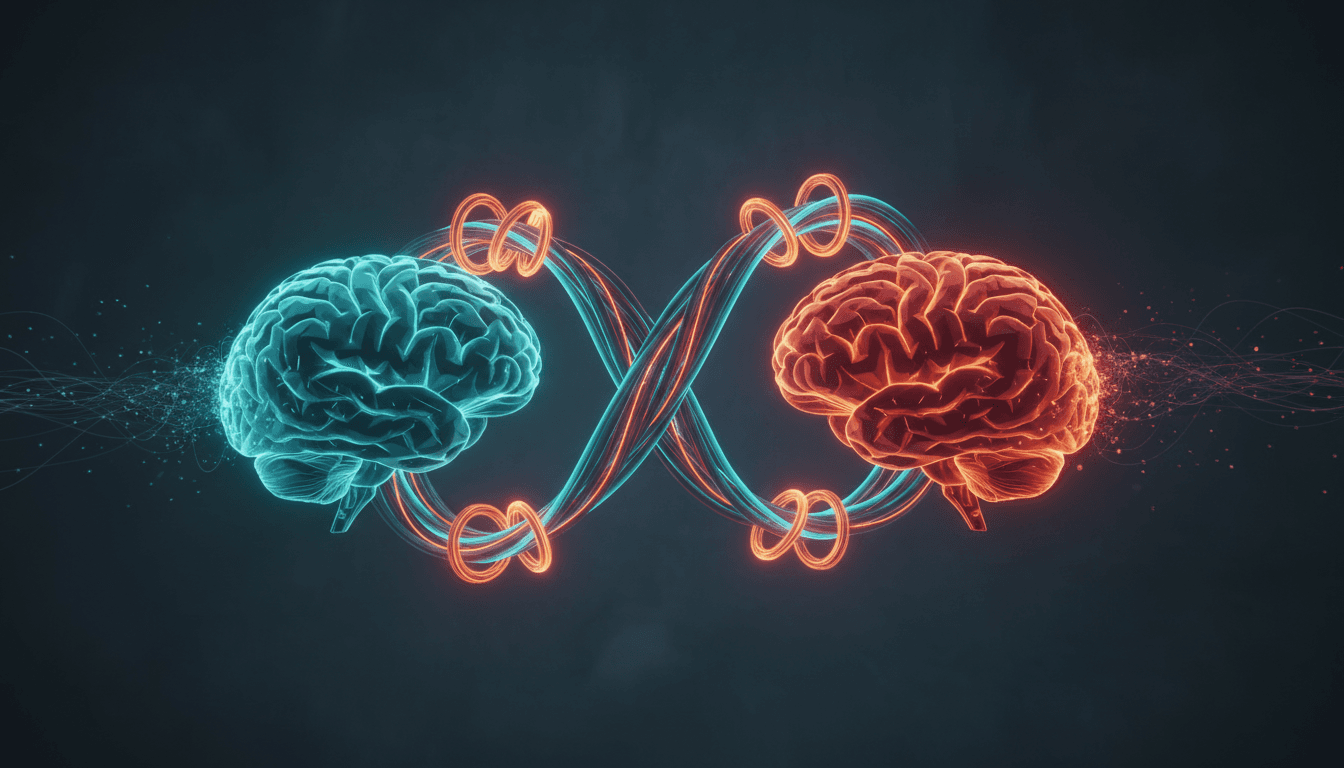
The loop works like this. Brain predicts pain. Brain generates pain. You feel pain. Brain interprets the pain as confirmation that the prediction was correct. Prediction strengthens. More pain. More confirmation. The signal feeds itself.
This is why chronic pain so often persists long after tissues have healed. Apkarian et al. showed in 2004 that chronic back pain patients had decreased gray matter in the prefrontal cortex and thalamus. Baliki et al. demonstrated in 2012 that they could predict which acute back pain patients would develop chronic pain based on corticostriatal connectivity patterns. Not based on the severity of the injury. Based on how the brain was wired.
The injury was in the back. The chronicity was in the brain.
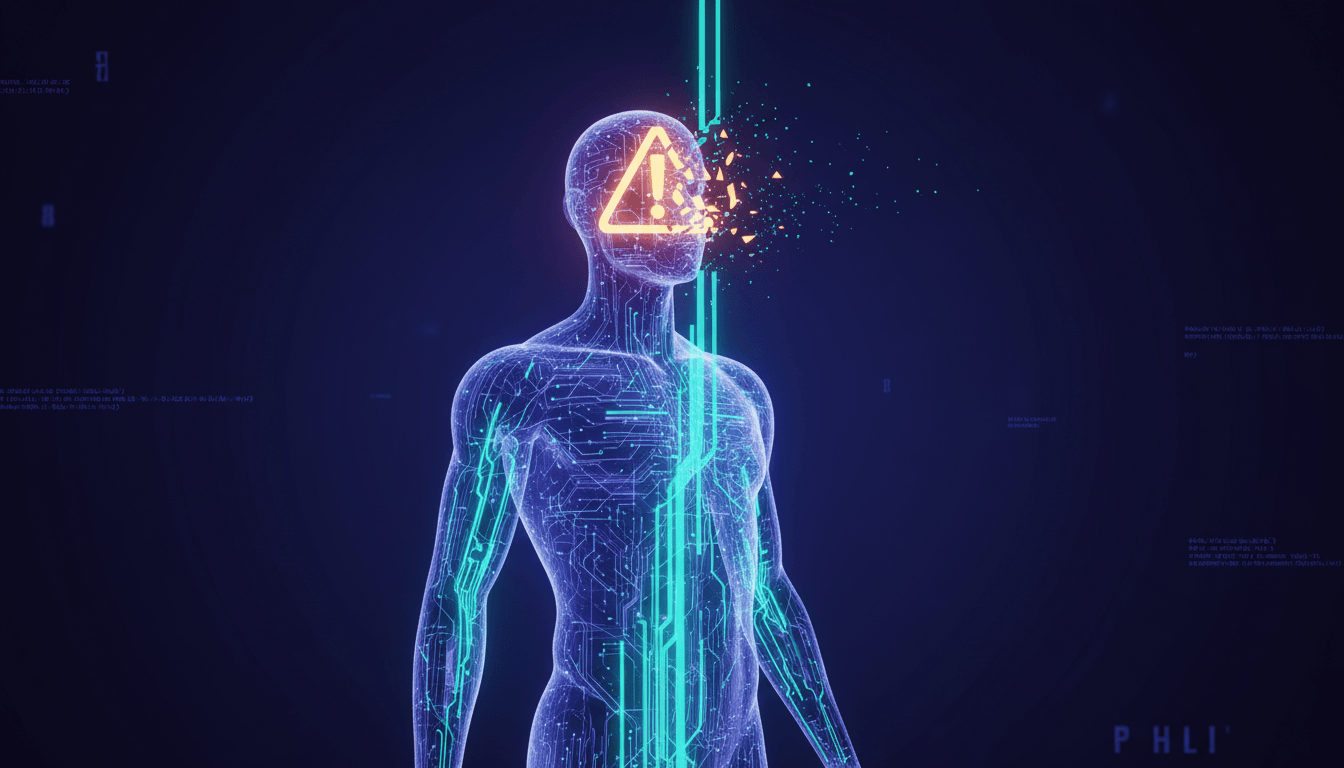
Chronic pain is a bug in the prediction engine. Valid input at some point (real injury, real threat). Valid output (pain). But the error handler got stuck in a loop and keeps throwing the same exception long after the original condition resolved. You can't fix that by patching the input. You have to update the logic.
Breaking the Loop
If chronic pain is a stuck prediction, then treatment needs to generate prediction error. New sensory evidence that contradicts the threat model. Something that tells the brain the thing it's predicting isn't happening.
This is exactly what mirror therapy does. Chan et al. published a randomized controlled trial in the 2007 New England Journal of Medicine showing that mirror therapy significantly reduced phantom limb pain. The mirror creates visual input that contradicts the brain's prediction of a missing, painful limb. Prediction error. The brain updates.
Graded motor imagery works on the same principle. So does sensory discrimination training. You're not fixing tissue. You're feeding the prediction engine new data until it recalibrates.
Pain neuroscience education does something similar but through a different channel. Moseley showed in 2004 that simply teaching people how pain works reduced their pain, disability, and anxiety. Louw et al. confirmed this in a 2011 systematic review. When people understand that pain is a brain output rather than a damage report, the threat value of their pain drops. The brain's alarm system dials down because the cognitive context has changed.
That's the same mechanism behind Beecher's 1946 observation that soldiers at Anzio reported less pain from severe wounds than civilians with similar injuries. Context. Meaning. The brain's interpretation of what the sensation means for your survival.
Virtual Reality and the New Frontier
Hunter Hoffman at the University of Washington pioneered VR pain research in 2000, showing that immersive virtual reality reduced pain ratings by 35-50% during burn wound care. The original explanation was distraction. The brain has limited attentional bandwidth. Occupy it with an immersive environment and there's less bandwidth for pain processing.
That's real, but it's only part of the story.
More recent work by Trost et al., published in The Lancet Digital Health in 2021, has moved beyond distraction toward something more interesting. VR-based graded exposure. Patients with chronic pain who are terrified of certain movements (bending, lifting, twisting) can perform those movements in a virtual environment where the threat level is controlled. The brain gets to experience the feared movement without the expected catastrophe. Prediction error, delivered through a headset.
This is essentially mirror therapy scaled up to full-body, three-dimensional, interactive environments. Ramachandran's insight from 1996, that you can trick the brain into updating its model with the right sensory input, taken to its technological conclusion.
The Software Fix
The convergence of all this research points in one direction. Away from the biomedical model (find the damage, fix the damage) and toward the biopsychosocial model (understand the system, recalibrate the system).
Nijs et al. laid out the blueprint in 2014 in Physical Therapy. Combine pain neuroscience education with cognition-targeted motor control training. Teach people how pain works. Then gradually expose them to the movements and activities their brain has flagged as threatening. Update the prediction. Break the loop.
Geneen et al.'s 2017 Cochrane review confirmed that physical activity reduces chronic pain severity. Not because exercise fixes damaged tissue. Because movement generates prediction errors. The brain predicted damage. You moved. No damage occurred. Prediction updated. Koltyn documented this exercise-induced analgesia back in 2000. The mechanism isn't just endorphins. It's the brain learning that movement is safe.
Seminowicz and Davis confirmed in 2006 with brain imaging that cortical responses to identical pain stimuli varied dramatically based on catastrophizing levels. Same input. Different prediction. Different pain.
Treating chronic pain by targeting only the body is like debugging software by replacing the keyboard. The input device isn't the problem. The program running the interpretation is.
The Future Looks Different
Millions of people live with chronic pain long after any tissue damage has healed. They've been told the problem is in their back, their knee, their shoulder. They've had surgeries that Moseley and Sihvonen proved work no better than sham procedures. They've been prescribed medications that treat the alarm without addressing why it keeps firing.
The future looks like education that changes how people understand their own pain. Graded exposure that feeds the brain new evidence. Virtual reality that lets people safely reconfront feared movements. Approaches that treat the brain's prediction model, not just the body's tissues.
Pain is a prediction. Predictions can be wrong. And wrong predictions, once you understand the code they're running on, can be rewritten.
Sources
- Pain Mechanisms: A New Theory (Melzack & Wall, 1965, Science) (opens in new tab)
- Phantom limbs and the concept of a neuromatrix (Melzack, 1990, Trends in Neurosciences) (opens in new tab)
- Pain in Men Wounded in Battle (Beecher, 1946, Annals of Surgery) (opens in new tab)
- Synaesthesia in Phantom Limbs Induced with Mirrors (Ramachandran & Rogers-Ramachandran, 1996, Proceedings of the Royal Society B) (opens in new tab)
- The perception of phantom limbs: The D.O. Hebb lecture (Ramachandran & Hirstein, 1998, Brain) (opens in new tab)
- Phantom-limb pain as a perceptual correlate of cortical reorganization following arm amputation (Flor et al., 1995, Nature) (opens in new tab)
- Chronic Back Pain Is Associated with Decreased Prefrontal and Thalamic Gray Matter Density (Apkarian et al., 2004, Journal of Neuroscience) (opens in new tab)
- Corticostriatal functional connectivity predicts transition to chronic back pain (Baliki et al., 2012, Nature Neuroscience) (opens in new tab)
- A Controlled Trial of Arthroscopic Surgery for Osteoarthritis of the Knee (Moseley et al., 2002, NEJM) (opens in new tab)
- Arthroscopic Partial Meniscectomy versus Sham Surgery for a Degenerative Meniscal Tear (Sihvonen et al., 2013, NEJM) (opens in new tab)
- To what extent are surgery and invasive procedures effective beyond a placebo response? (Jonas et al., 2015, BMJ Open) (opens in new tab)
- Mirror Therapy for Phantom Limb Pain (Chan et al., 2007, NEJM) (opens in new tab)
- Does Rejection Hurt? An fMRI Study of Social Exclusion (Eisenberger et al., 2003, Science) (opens in new tab)
- Social rejection shares somatosensory representations with physical pain (Kross et al., 2011, PNAS) (opens in new tab)
- Acetaminophen Reduces Social Pain (DeWall et al., 2010, Psychological Science) (opens in new tab)
- Conscious Expectation and Unconscious Conditioning in Analgesic, Motor, and Hormonal Placebo/Nocebo Responses (Benedetti et al., 2003, Journal of Neuroscience) (opens in new tab)
- When words are painful: Unraveling the mechanisms of the nocebo effect (Benedetti et al., 2007, Neuroscience) (opens in new tab)
- Can words hurt? Patient-provider interactions during invasive procedures (Lang et al., 2005, Pain) (opens in new tab)
- Theoretical perspectives on the relation between catastrophizing and pain (Sullivan et al., 1995, Clinical Journal of Pain) (opens in new tab)
- Catastrophizing and pain in arthritis, fibromyalgia, and other rheumatic diseases (Edwards et al., 2009, Arthritis and Rheumatism) (opens in new tab)
- Cortical responses to pain in healthy individuals depends on pain catastrophizing (Seminowicz & Davis, 2006, Pain) (opens in new tab)
- Evidence for a direct relationship between cognitive and physical change during an education intervention in people with chronic low back pain (Moseley, 2004, European Journal of Pain) (opens in new tab)
- The effect of neuroscience education on pain, disability, anxiety, and stress in chronic musculoskeletal pain (Louw et al., 2011, Archives of Physical Medicine and Rehabilitation) (opens in new tab)
- Finding the Hurt in Pain (Tracey, 2019, Cerebral Cortex) (opens in new tab)
- Analgesia following exercise: A review (Koltyn, 2000, Sports Medicine) (opens in new tab)
- A Modern Neuroscience Approach to Chronic Spinal Pain (Nijs et al., 2014, Physical Therapy) (opens in new tab)
- Physical activity and exercise for chronic pain in adults (Geneen et al., 2017, Cochrane Database of Systematic Reviews) (opens in new tab)
- Virtual Reality as an Adjunctive Pain Control During Burn Wound Care (Hoffman et al., 2000, Pain) (opens in new tab)
- IASP Revised Definition of Pain (2020, Pain) (opens in new tab)
Part of the Pain Illusion series. Previous: The Best Painkiller Is the One That Hurts.