The Worse You Practice, the Better You Learn
Robert Bjork's 'desirable difficulties' framework explains why the learning strategies that feel the smoothest produce the least durable results, and why struggle is the actual signal of progress.

Justin Angeles
· 8 min read
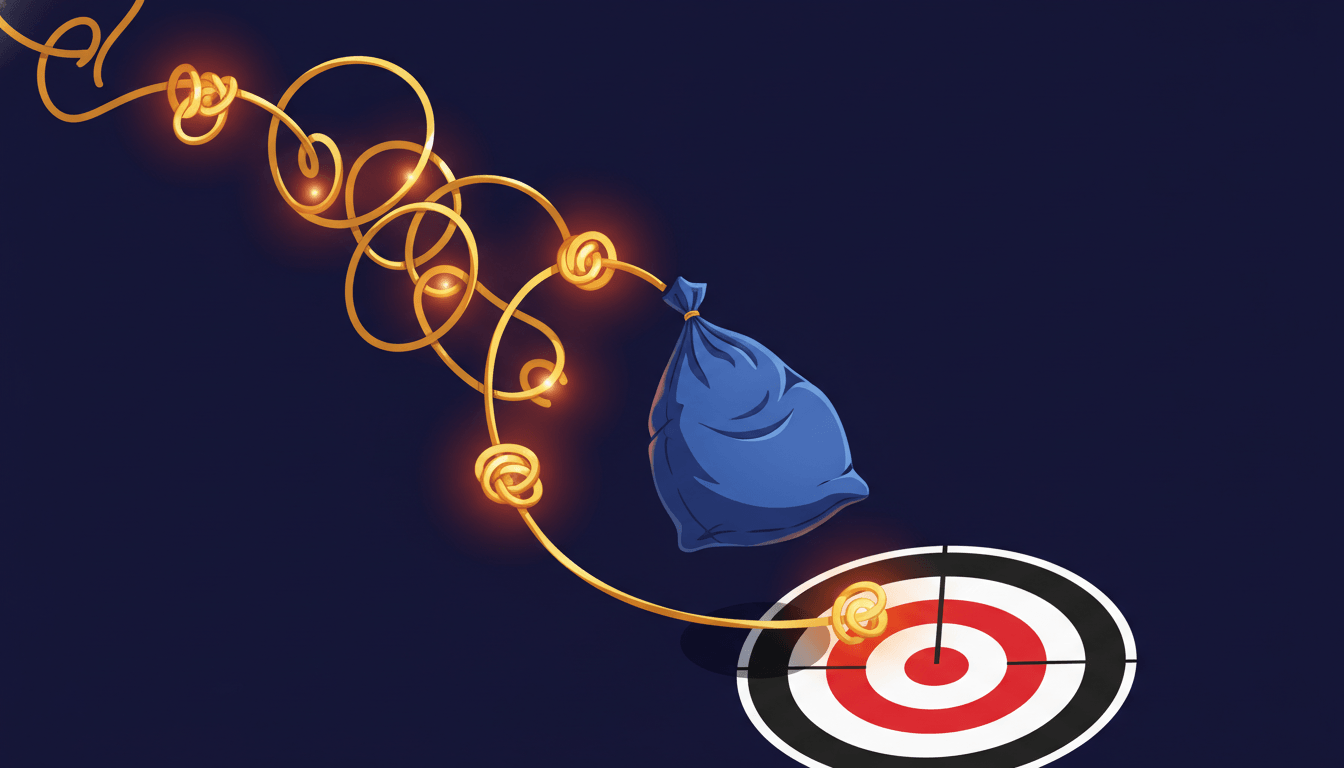
In 1978, researchers Robert Kerr and Ben Booth had children practice tossing beanbags at a target 3 feet away. One group practiced exactly at 3 feet, over and over. The other group practiced at 2 feet and 4 feet but never once at the test distance.
On the final test at 3 feet, the group that had never practiced at 3 feet was significantly more accurate.
Read that again. The kids who never practiced the thing they were tested on outperformed the kids who practiced it exclusively. If that doesn't break something in your model of how learning works, you weren't paying attention.
The Name for This
Robert Bjork at UCLA coined the term "desirable difficulties" in 1994. It describes a class of learning conditions that make practice feel harder, slower, and more frustrating in the moment but produce dramatically better retention and transfer over time.
The word "desirable" is doing real work in that phrase. Not all difficulty helps. Trying to learn calculus in a language you don't speak isn't a desirable difficulty. It's just difficulty. The distinction is whether you can still meaningfully engage with the material while struggling. If yes, the struggle is building something. If no, you're just lost.
Bjork and Bjork laid this out in their 2011 chapter "Making Things Hard on Yourself, But in a Good Way." Learning conditions that require more cognitive effort during practice create stronger and more flexible memory representations. Smooth practice creates fragile memory. Effortful practice creates durable memory.
This is the opposite of what every intuition tells you.
Why Easy Practice Lies to You
Rereading. Highlighting. Cramming the night before. The strategies that feel productive are the ones that work the worst. When you reread your notes and the material flows smoothly, your brain interprets that fluency as evidence of learning. You feel like you know it. Nate Kornell's 2009 research on flashcard optimization showed learners consistently chose strategies that felt more fluent over strategies that produced better results. We are reliably terrible judges of our own learning.
The spacing effect, which I wrote about in article two of this series, is a desirable difficulty. Ebbinghaus documented it in 1885. Cepeda and colleagues confirmed it in a 2006 meta-analysis of 184 verbal recall studies. Spreading practice across time feels worse because each session starts with partial forgetting. You feel rusty. Each time you rebuild a fading memory, the reconstruction makes it stronger.
The testing effect is a desirable difficulty. Roediger and Karpicke showed in 2006 that students who tested themselves remembered significantly more after a week than students who spent the same time rereading. Testing feels harder. You sit there staring at a blank page knowing the answer is somewhere in your head but unable to reach it. That failure to retrieve is strengthening the retrieval pathway. Karpicke and Blunt pushed this further in 2011, publishing in Science that retrieval practice produced more learning than elaborative studying with concept mapping. Not marginally more. Substantially more.
Interleaving is a desirable difficulty. Rohrer and Taylor showed in 2007 that shuffling math problem types during practice led to worse practice scores but better test performance. Kornell and Bjork found the same with category learning in 2008. Mixing categories forces you to discriminate between them instead of just repeating within one. It feels chaotic. The chaos is the mechanism.
The Beanbag Problem Everywhere
Schmidt and Bjork named this pattern "contextual interference" in 1992 after seeing it across motor learning. Higher interference during practice led to poorer practice performance but superior retention and transfer. The variable practice group looks worse in the gym and performs better in the game.
Kornell, Hays, and Bjork found something even stranger in 2009. Failing to retrieve something, getting it wrong before being told the answer, actually enhanced subsequent learning of that material. The error itself becomes part of the encoding.
Manu Kapur's work on productive failure (2008, 2014) extends this. Students who struggled with problems before receiving instruction outperformed students who got instruction first. The struggle built scaffolding that made the eventual explanation click.
Slamecka and Graf's generation effect (1978) says the same thing from another angle. Information you generate yourself, even partially, sticks better than information you passively receive. Generating is harder than reading. That's why it works.
The Tragedy
Frank Dempster wrote a paper in 1988 called "The Spacing Effect: A Case Study in the Failure to Apply the Results of Psychological Research." He documented how one of the most robust findings in all of cognitive psychology, that spacing improves learning, had been known for over a century and was still almost completely ignored in education.
Nearly 40 years later, not much has changed.
Bjork calls this the central tragedy of education. The methods that maximize the appearance of learning minimize actual learning. When a teacher introduces spacing or interleaving or retrieval practice and the students' practice performance dips, everyone panics. The students feel like they're failing. The teacher gets nervous. The administration looks at the numbers and demands a return to methods that "work."
But those numbers measure practice performance, not learning. They optimize for how smooth things look during the session, not how much sticks three weeks later. McDaniel, Agarwal, and colleagues showed it directly in a 2011 middle school science study: students using retrieval practice scored significantly higher on unit and end-of-semester exams. Harder practice. Better results.
Corporate training has the same problem, maybe worse. A session where everyone nods along and completes exercises smoothly gets high satisfaction scores. A session with desirable difficulties, where people struggle and feel confused, gets low ones. Guess which one the company keeps running.
The Learning Styles Tax
It gets worse. Dekker and colleagues surveyed teachers across the UK and Netherlands in 2012 and found neuromyths were rampant. Learning styles. Left-brain versus right-brain. The 10% myth. Pashler, McDaniel, Rohrer, and Bjork reviewed the evidence on learning styles in 2008 and found essentially zero support for matching instruction to supposed visual or auditory preferences. Rogowsky and colleagues confirmed it again in 2015.
Newton and Miah asked in 2017 whether the myth actually mattered. Their answer was yes, because it crowds out evidence-based strategies. Every hour spent identifying "visual learners" is an hour not spent implementing spacing, testing, or interleaving. The myth isn't just wrong. It's an opportunity cost.
We know what works. We've known for decades. The problem is what works feels bad, and we've built entire educational systems around making learning feel good.
Close the Docs
I run into this every time I'm learning a new framework or debugging a concept I don't fully understand. The moment where I want to reread the docs one more time, where the comfortable thing is to review what I already sort of know, that's the moment where desirable difficulty says: no. Test yourself. Try to build it from memory. Get it wrong. Try again.
It feels terrible. Every time. My brain says I'm wasting time, just look up the answer. But the research is absurdly clear. The struggle is the mechanism.
The beanbag kids never practiced at 3 feet. They were more accurate at 3 feet than the kids who only practiced at 3 feet. Variable, difficult, frustrating practice built something that smooth, repetitive, comfortable practice couldn't.
Your brain doesn't learn from fluency. It learns from effort. The difficulty is the feature.
Sources
- Specific and Varied Practice of Motor Skill (Kerr & Booth, 1978, Perceptual and Motor Skills) (opens in new tab)
- Making Things Hard on Yourself, But in a Good Way (Bjork & Bjork, 2011, Psychology and the Real World) (opens in new tab)
- Optimising Learning Using Flashcards (Kornell, 2009, Applied Cognitive Psychology) (opens in new tab)
- Über das Gedächtnis (Ebbinghaus, 1885) (opens in new tab)
- Distributed Practice in Verbal Recall Tasks (Cepeda et al., 2006, Psychological Bulletin) (opens in new tab)
- Test-Enhanced Learning (Roediger & Karpicke, 2006, Psychological Science) (opens in new tab)
- Retrieval Practice Produces More Learning than Elaborative Studying with Concept Mapping (Karpicke & Blunt, 2011, Science) (opens in new tab)
- The Shuffling of Mathematics Problems Improves Learning (Rohrer & Taylor, 2007, Instructional Science) (opens in new tab)
- Learning Concepts and Categories: Is Spacing the "Enemy of Induction"? (Kornell & Bjork, 2008, Psychological Science) (opens in new tab)
- New Conceptualizations of Practice (Schmidt & Bjork, 1992, Psychological Science) (opens in new tab)
- Unsuccessful Retrieval Attempts Enhance Subsequent Learning (Kornell, Hays, & Bjork, 2009, Journal of Experimental Psychology: Learning, Memory, and Cognition) (opens in new tab)
- Productive Failure (Kapur, 2008, Cognition and Instruction) (opens in new tab)
- Productive Failure in Learning Math (Kapur, 2014, Cognitive Science) (opens in new tab)
- The Generation Effect (Slamecka & Graf, 1978, Journal of Experimental Psychology: Human Learning and Memory) (opens in new tab)
- The Spacing Effect: A Case Study in the Failure to Apply the Results of Psychological Research (Dempster, 1988, American Psychologist) (opens in new tab)
- Test-Enhanced Learning in a Middle School Science Classroom (McDaniel et al., 2011, Journal of Educational Psychology) (opens in new tab)
- The Value of Applied Research (Agarwal, Bain, & Chamberlain, 2012, Educational Psychology Review) (opens in new tab)
- Neuromyths in Education (Dekker et al., 2012, Frontiers in Psychology) (opens in new tab)
- Learning Styles: Concepts and Evidence (Pashler et al., 2008, Psychological Science in the Public Interest) (opens in new tab)
- Matching Learning Style to Instructional Method (Rogowsky, Calhoun, & Tallal, 2015, Journal of Educational Psychology) (opens in new tab)
- Evidence-Based Higher Education, Is the Learning Styles "Myth" Important? (Newton & Miah, 2017, Frontiers in Psychology) (opens in new tab)
Part of the Practice Paradox series. Previous: Stop Rereading. You're Just Feeling Smart.. Next: Your Brain Learns Better When It Feels Like It's Failing.