Failing Before You're Taught Is the Best Way to Learn
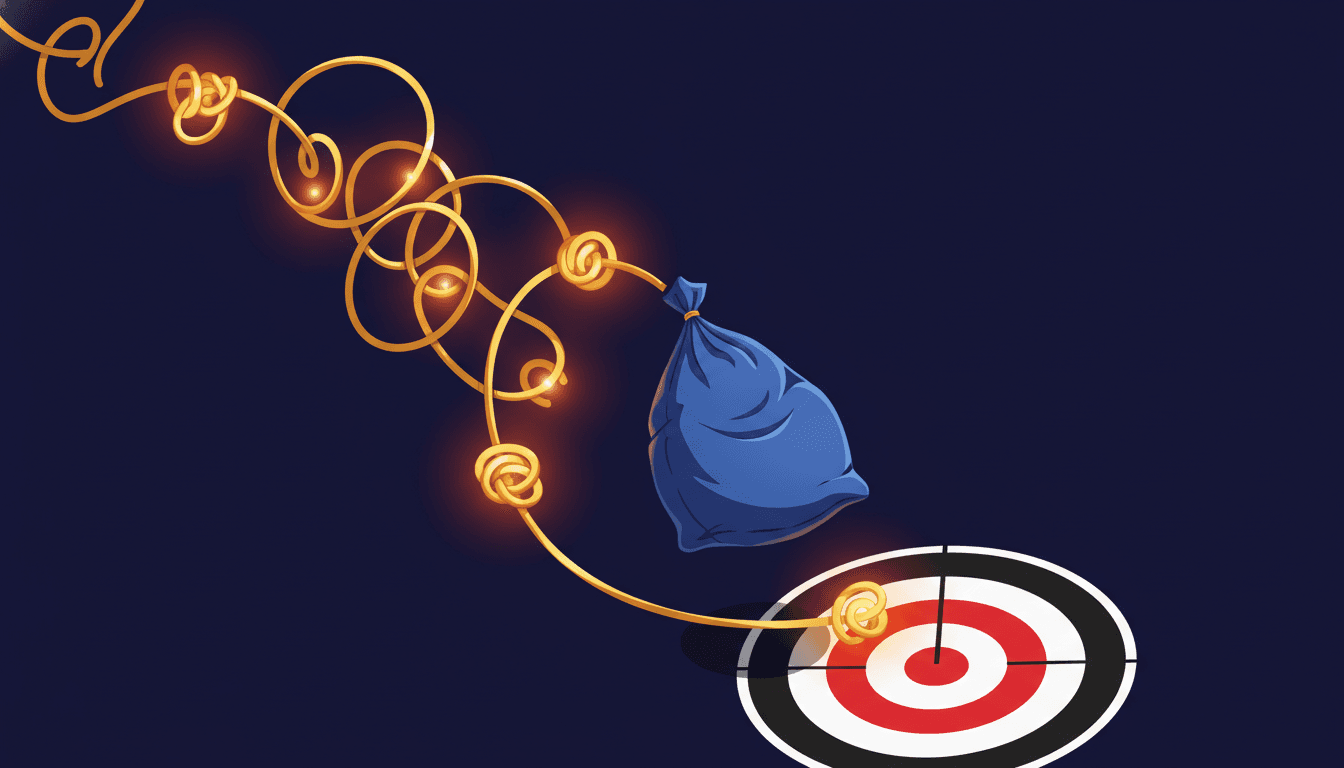
Two separate lines of research arrived at the same uncomfortable conclusion: struggling with a problem you can't yet solve makes you learn the solution better than just being told it.

Justin Angeles
· 8 min read

In 1978, Norman Slamecka and Peter Graf at NYU ran a deceptively simple memory experiment. They gave participants word pairs. Half the time, participants saw both words. "Hot, cold." The other half saw only the first word and a partial cue. "Hot, c___." They had to generate the missing word themselves.
Same word. Same information. Different act of getting there.
A week later, the words participants generated themselves were recalled substantially better than the words they had simply read. Producing an answer, even a trivially easy one, created a stronger memory trace than passively receiving the same answer.
They called it the generation effect. It set the stage for one of the most counterintuitive findings in the science of learning.
The Logic Behind Generation
Slamecka and Graf weren't just showing effort helps. They were isolating something specific. The generation condition didn't involve more time. It didn't involve deeper semantic processing. It involved reaching for information rather than receiving it.
Your brain treats those two events very differently. When you read "hot, cold," you process the relationship. When you generate "cold" from "hot, c___," your brain has to activate the knowledge, search for what fits, and commit. You ran a retrieval-like operation during the initial encoding, and retrieval is what makes memories stick.
The generation effect has been replicated across hundreds of studies. Vocabulary lists. Mathematical formulas. Scientific concepts. About as robust as findings get in cognitive psychology.
Manu Kapur's Radical Extension
For three decades, the generation effect was a memory phenomenon. Useful, but limited.
Then Manu Kapur, a learning scientist working in Singapore schools (now at ETH Zurich), pushed the idea somewhere uncomfortable. What if you made students generate not just a word, but a solution to a math problem they hadn't been taught yet?
In a 2008 study in Cognition and Instruction, Kapur worked with 11th-grade physics students. One group followed the standard sequence. Teacher explains, students practice. The other group attempted problems without instruction first. They collaborated, generated multiple approaches, argued, and mostly failed.
Then both groups received the same direct instruction. Both took a test.
The students who had failed first performed better. Not on easy recall. On transfer problems, the kind that require understanding the concept well enough to apply it in a new context.
Kapur called this "productive failure." And he ran it again.
The 2014 Replication
The 2008 study used collaborative group work, which introduced confounders. Maybe collaboration, not failure, drove the effect. Kapur addressed this in 2014 in Cognitive Science with individual problem solving.
Same design. Students either solved problems first and then received instruction, or received instruction first and then solved problems. Same total time. Same teacher. Same instruction.
On procedural tests, both groups performed about equally. On conceptual understanding and transfer, the failure-first group won by a significant margin.
The key variable wasn't success or failure. It was what the attempt did to the brain before instruction arrived.
Preparation for Future Learning
Kapur and Bielaczyc named the mechanism in 2012. "Preparation for future learning." Struggling with a problem you can't yet solve does three things at once.
It activates prior knowledge. Handed a statistics problem you can't solve, your brain pulls up everything it knows that might be relevant. Averaging. Spread. Comparison. You're building scaffolding without knowing it.
It reveals gaps. The moment you try to solve something, you discover what you don't understand. Not abstractly. Concretely. "I don't know what to do when the numbers are different distances from the center." That specific gap makes you attentive when instruction addresses it.
It creates motivated attention. You've been struggling. You have active questions. When the teacher explains the method, you're checking it against your failed attempts. Pieces click that wouldn't click if you'd never tried.
Loibl, Roll, and Rummel reviewed 49 studies on this design in 2017. Productive failure showed a significant advantage over direct instruction for conceptual understanding and transfer. It worked best when students could partially engage with the problem. Pure confusion, trying to solve something you have zero context for, helps less. The difficulty has to be at the right level. Desirable, as Bjork puts it.
The Uncomfortable Implication
Standard instruction runs on efficiency logic. Explain clearly, have people practice. Confusion is waste.
Productive failure says this logic is wrong for the outcomes that matter most. If you want someone to execute a practiced procedure, efficiency wins. But if you want them to understand a concept well enough to apply it to problems they've never seen, you need to let them fail first.
Most real-world challenges aren't solved by running a practiced procedure. They're solved by recognizing what approach applies, adapting it, and diagnosing when your method isn't working. That's conceptual knowledge. It develops differently.
Kapur puts it directly. The confusion and frustration of early failure aren't noise in the learning process. They're the signal.
The Prediction Error Engine
At the neural level, this connects to the prediction error mechanism running underneath effective learning.
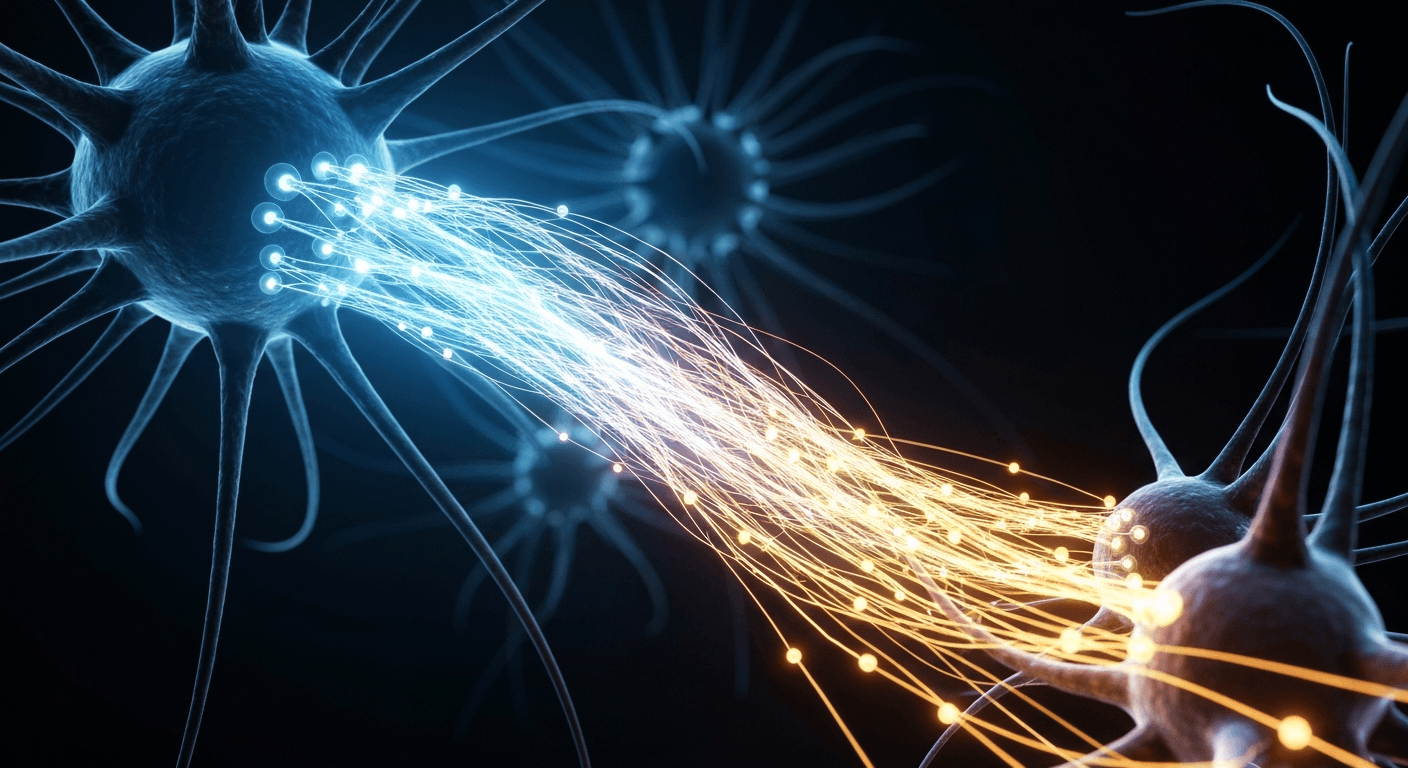
When you attempt a problem and fail, your brain generates a large prediction error. You expected to solve it. You didn't. That mismatch triggers elevated attention and deeper encoding. When instruction arrives, your brain processes it against your failed attempt. The correction hits harder.
Kornell, Hays, and Bjork showed this in 2009 from the retrieval angle. Trying and failing to recall something before receiving the answer produced better learning than simply studying the answer. Failing and then learning beats just learning.
Generation effect, productive failure, testing effect. Same biology. The brain's learning rate scales with prediction error. Surprises get encoded. Smooth confirmations don't.
The Tutorial-First Trap
The pull to watch the tutorial before trying the thing is strong. Read the documentation. Study the approach. Get the steps in your head before attempting the problem. Understand it first, waste less time confused.
But the confusion is often the point. Twenty minutes flailing with a React hook I don't fully understand makes the documentation paragraph that explains it land completely differently than if I'd read it first. The confusion created questions. The documentation answered them. A fundamentally different cognitive event than reading documentation without questions.
This doesn't mean you should never look at explanations first. Procedural tasks where you really do need the steps before you can engage are different. But when the goal is understanding rather than execution, there's real value in failing in the dark for a while before someone turns the lights on.
The failure isn't wasted time. It's doing something instruction alone can't do.
What This Does to "Covering the Material"
Educational systems are built around coverage. Chapters 1 through 12. Pacing guides. Standards. Every day students struggle without having been taught yet looks, from outside, like inefficiency.
But Kapur's students who failed first didn't take longer. They learned the material in the same time as the direct instruction group. They just used some of it attempting problems before explanation rather than after.
Total time, same. Conceptual understanding and transfer, not.
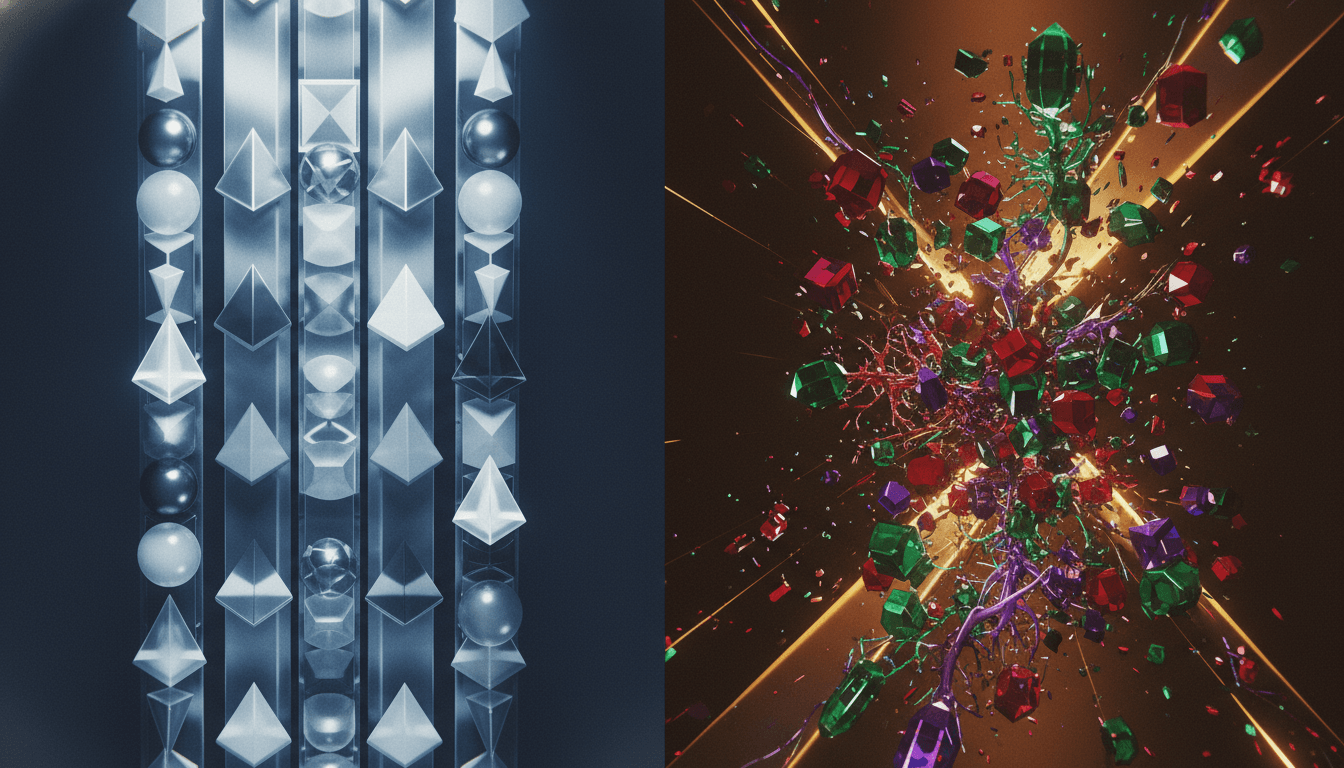
Standard instruction optimizes for a smooth journey through content. Productive failure optimizes for what happens inside a brain when concepts arrive mid-struggle. Different targets. Different results.
Forty-nine studies say so.
Sources
- The Generation Effect: Delineation of a Phenomenon (Slamecka & Graf, 1978, Journal of Experimental Psychology: Human Learning and Memory) (opens in new tab)
- Productive Failure (Kapur, 2008, Cognition and Instruction) (opens in new tab)
- Designing for Productive Failure (Kapur & Bielaczyc, 2012, Journal of the Learning Sciences) (opens in new tab)
- Productive Failure in Learning Math (Kapur, 2014, Cognitive Science) (opens in new tab)
- Towards a Theory of When and How Problem Solving Followed by Instruction Supports Learning (Loibl, Roll, & Rummel, 2017, Educational Psychology Review) (opens in new tab)
- Unsuccessful Retrieval Attempts Enhance Subsequent Learning (Kornell, Hays, & Bjork, 2009, Journal of Experimental Psychology: Learning, Memory, and Cognition) (opens in new tab)
- Making Things Hard on Yourself, But in a Good Way (Bjork & Bjork, 2011, Psychology and the Real World) (opens in new tab)
- Test-Enhanced Learning (Roediger & Karpicke, 2006, Psychological Science) (opens in new tab)
Part of the Practice Paradox series. Previously: Experts Don't Think Harder. They See Different.