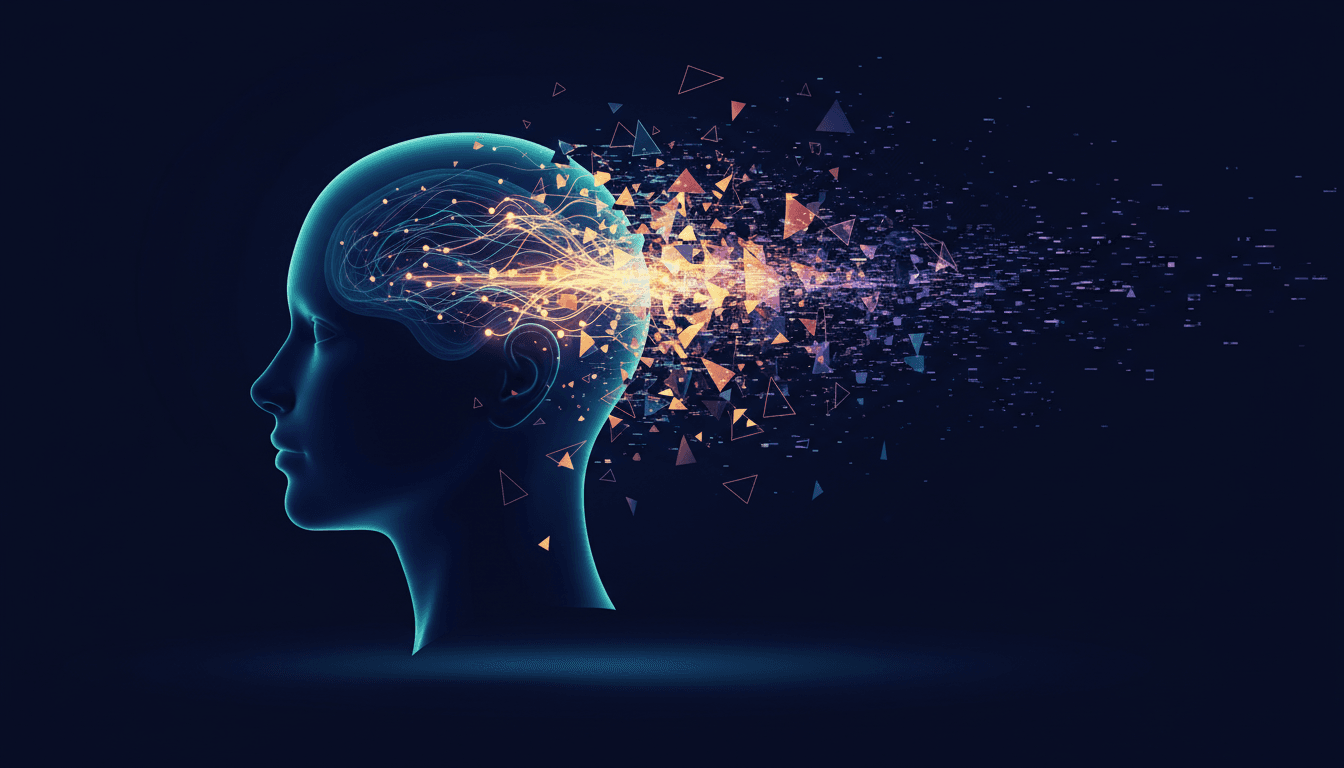
Your Brain Runs on Probability, Not Facts
Every belief you hold is a bet. The mathematical framework behind predictive processing explains why first impressions stick, why anxiety hijacks your body, and why you literally cannot see evidence that contradicts what you already believe.

Justin Angeles
· 7 min read
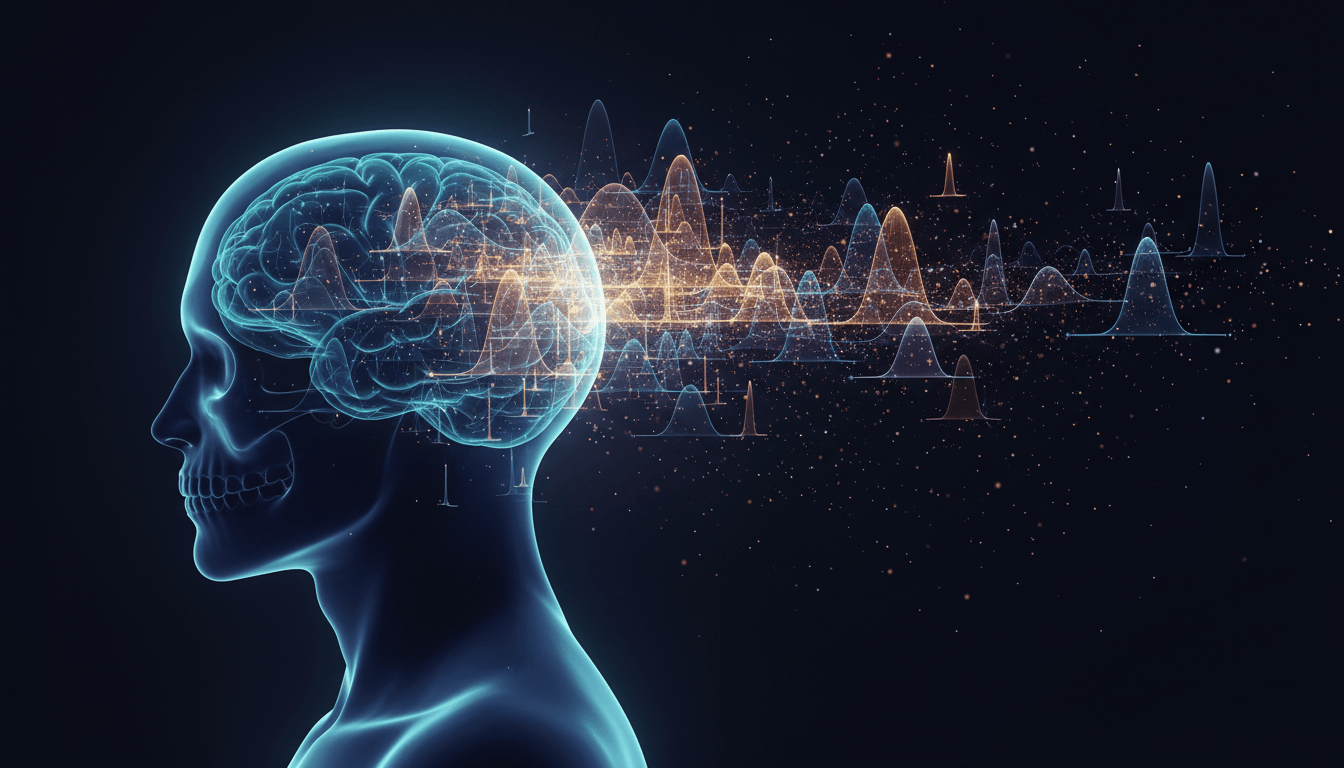
Your brain has never held a fact in its life.
Every single thing you believe, from "the sun will rise tomorrow" to "my partner loves me" to "this chair will hold my weight," exists as a probability. Not a binary yes or no. A distribution. A bet with confidence levels attached.
This isn't a metaphor. It's the actual math running underneath your skull.
The Formula That Explains Your Mind
In 2005, Karl Friston at University College London published a paper in Philosophical Transactions of the Royal Society B that unified decades of neuroscience under one framework. The idea: your brain is a Bayesian inference machine. It holds predictions about the world (called "priors"), receives sensory evidence (called "likelihoods"), and combines them to produce updated beliefs (called "posteriors").
The brain minimizes something Friston called "free energy." Which is essentially the gap between what your brain's model expects and what actually shows up at your senses. Two ways to close that gap. Update your predictions to match reality. Or act on the world to make reality match your predictions.
That second option is wild when you think about it. Your brain doesn't just passively learn. It actively tries to make the world conform to what it already believes.
Andy Clark laid this out in his 2013 paper "Whatever Next?" in Behavioral and Brain Sciences. He called the brain a "prediction machine" that generates hypotheses about incoming signals before they arrive. Perception isn't observation. It's controlled hallucination with error-correction.
Why First Impressions Won't Die
Daniel Kahneman and Amos Tversky discovered the anchoring effect back in 1974. Show someone the number 65, then ask them what percentage of African countries are in the United Nations. They'll guess higher than someone who first saw the number 10. The first number contaminates everything after it.
In Bayesian terms, that first number becomes your prior. High-confidence priors (technically, low variance) barely move when new evidence arrives.
Think about someone you met and immediately disliked. Maybe they said something awkward or gave off a weird vibe. That first impression became a high-confidence prior. Every interaction after that gets filtered through it. They do something nice? Your brain down-weights it. Probably just being polite. They do something slightly off? See, I knew it.
You're not being stubborn. You're being Bayesian.
Jakob Hohwy's The Predictive Mind walks through how this plays out across every domain of cognition. Your brain treats its own predictions as more reliable than individual data points. Which makes sense evolutionarily. Your model of the world is built from thousands of experiences. One contradictory observation probably shouldn't overturn all of that.
Probably.
Confirmation Bias Is Math, Not Stupidity
This framework reframes one of psychology's most famous findings. Confirmation bias isn't a bug in human reasoning. It's Bayesian inference doing exactly what it's supposed to do.
When you hold a confident prior belief and encounter contradictory evidence, your brain generates a prediction error. But that error gets weighted against the confidence of your prior. Strong prior, weak update. The contradictory evidence literally registers as less important to your neural processing than confirming evidence would.
You don't just ignore evidence that contradicts your beliefs. You perceive it as less real. Less salient. Less worthy of attention.
Harriet Feldman and Karl Friston formalized this in their 2010 paper "Attention, Uncertainty, and Free-Energy" in Frontiers in Human Neuroscience. Attention itself is a precision-weighting mechanism. Your brain allocates more processing power to signals it expects to be informative. If your model already has high confidence, contradictory signals get less attention. Literally less neural bandwidth.
This is why political arguments go nowhere. Why people can look at the same data and reach opposite conclusions. Why you can show someone a study that directly contradicts their belief and they'll find a reason to dismiss it. Their brain is doing math. The math says the prior wins.
When the Precision Knob Breaks
Rosalyn Moran's lab at King's College London has been using computational models to map how precision-weighting differs across psychiatric conditions. In a 2019 study, she showed that people with high anxiety assign too much precision to interoceptive prediction errors. Translation: every minor body sensation gets flagged as important.
Your heart beats a little faster. A non-anxious brain says, probably just moved too quickly, and down-weights the signal. An anxious brain says, this is significant, and cranks up the precision. Now you're paying attention to your heartbeat. Which makes you more anxious. Which makes your heart beat faster. Which generates more prediction errors.
Sahib Khalsa and colleagues mapped this out in their 2018 roadmap paper in Biological Psychiatry, connecting interoceptive processing differences to anxiety, depression, eating disorders, and addiction. The common thread isn't broken emotions. It's miscalibrated precision-weighting on body signals.
Lisa Feldman Barrett's constructed emotion theory fits here perfectly. In her 2017 paper in Social Cognitive and Affective Neuroscience, she argued that emotions aren't triggered reactions. They're the brain's best guess about what body signals mean, built from priors and context. An anxious brain doesn't feel more. It predicts more catastrophically.
I recognize this pattern in myself. There have been stretches where every minor physical sensation became a data point for something being wrong. Tight chest? Must be serious. Headache? Probably something bad. The sensation itself was real. But the interpretation was my brain running Bayesian inference with broken precision settings. Assigning too much weight to prediction errors that deserved to be ignored.
The Autism and Schizophrenia Connection
Rebecca Lawson's 2017 study in Nature Neuroscience found that adults with autism overestimate the volatility of their sensory environment. In Bayesian terms, they treat the world as less predictable than it is. Which means their priors are weaker. Which means every prediction error hits harder. Every unexpected sound, texture, or social cue carries more weight because the brain's model hasn't learned to dampen it.
On the other end, Danai Dima and colleagues published a 2009 study in NeuroImage showing that people with schizophrenia don't perceive the hollow-mask illusion. Most people see a concave face as convex because their prior (faces are convex) overrides the sensory data. In schizophrenia, the prior is weaker. Sensory data dominates. Which sounds like it should be more accurate, but it's not. It means the brain's model can't impose order on chaos. Hallucinations and delusions follow.
Too much prior. Too little prior. Both break the system.
You Can Recalibrate
Michelle Craske's inhibitory learning approach to exposure therapy, published in Behaviour Research and Therapy in 2014, is essentially Bayesian updating on purpose. You don't try to eliminate the old fear. You build a new prediction that competes with it. Enough evidence, enough repetition, and the posterior shifts. The old prior loses confidence.
Norman Farb's 2007 study in Social Cognitive and Affective Neuroscience showed that mindfulness meditation shifts processing from narrative self-reference (running predictions about who you are and what will happen) to direct sensory awareness. In Bayesian terms, you're temporarily lowering the precision on your priors and letting raw sensory data speak louder.
Even exercise works through this framework. Joshua Broman-Fulks showed in 2004 that aerobic exercise reduces anxiety sensitivity. Your brain learns that an elevated heart rate doesn't mean danger. It updates the prior. The same interoceptive signal that used to trigger a cascade now gets correctly categorized as "just moved my body."
Beliefs Are Bets
Your beliefs aren't facts you've discovered. They're bets you've placed. And like all bets, they carry a confidence level that determines how much new evidence will actually change your mind.
The people who update well aren't smarter. They hold their priors with appropriate uncertainty. They let prediction errors in. They treat their own beliefs as hypotheses, not truths.
Sources
- A Theory of Cortical Responses (Friston, 2005, Philosophical Transactions of the Royal Society B) (opens in new tab)
- Whatever Next? Predictive Brains, Situated Agents, and the Future of Cognitive Science (Clark, 2013, Behavioral and Brain Sciences) (opens in new tab)
- Attention, Uncertainty, and Free-Energy (Feldman & Friston, 2010, Frontiers in Human Neuroscience) (opens in new tab)
- The Theory of Constructed Emotion: An Active Inference Account (Barrett, 2017, Social Cognitive and Affective Neuroscience) (opens in new tab)
- Interoception and Mental Health: A Roadmap (Khalsa et al., 2018, Biological Psychiatry: CNNI) (opens in new tab)
- Adults with Autism Overestimate the Volatility of the Sensory Environment (Lawson et al., 2017, Nature Neuroscience) (opens in new tab)
- Understanding Why Patients with Schizophrenia Do Not Perceive the Hollow-Mask Illusion (Dima et al., 2009, NeuroImage) (opens in new tab)
- The Predictive Mind (Hohwy, 2013, Oxford University Press) (opens in new tab)
- Maximizing Exposure Therapy: An Inhibitory Learning Approach (Craske et al., 2014, Behaviour Research and Therapy) (opens in new tab)
- Attending to the Present: Mindfulness Meditation Reveals Distinct Neural Modes of Self-Reference (Farb et al., 2007, Social Cognitive and Affective Neuroscience) (opens in new tab)
- Effects of Aerobic Exercise on Anxiety Sensitivity (Broman-Fulks et al., 2004, Behaviour Research and Therapy) (opens in new tab)
- Judgment Under Uncertainty: Heuristics and Biases (Tversky & Kahneman, 1974, Science) (opens in new tab)
Part of the Prediction Machine series. Previous: Your Brain Learns by Being Wrong. Next: Your Brain Invents Every Emotion You Feel.