The Molecular Gears: How a Single Cell Keeps Time
Three scientists won a Nobel Prize for figuring out how cells tell time. The answer is a feedback loop so elegant it runs in nearly every cell in your body.

Justin Angeles
· 6 min read
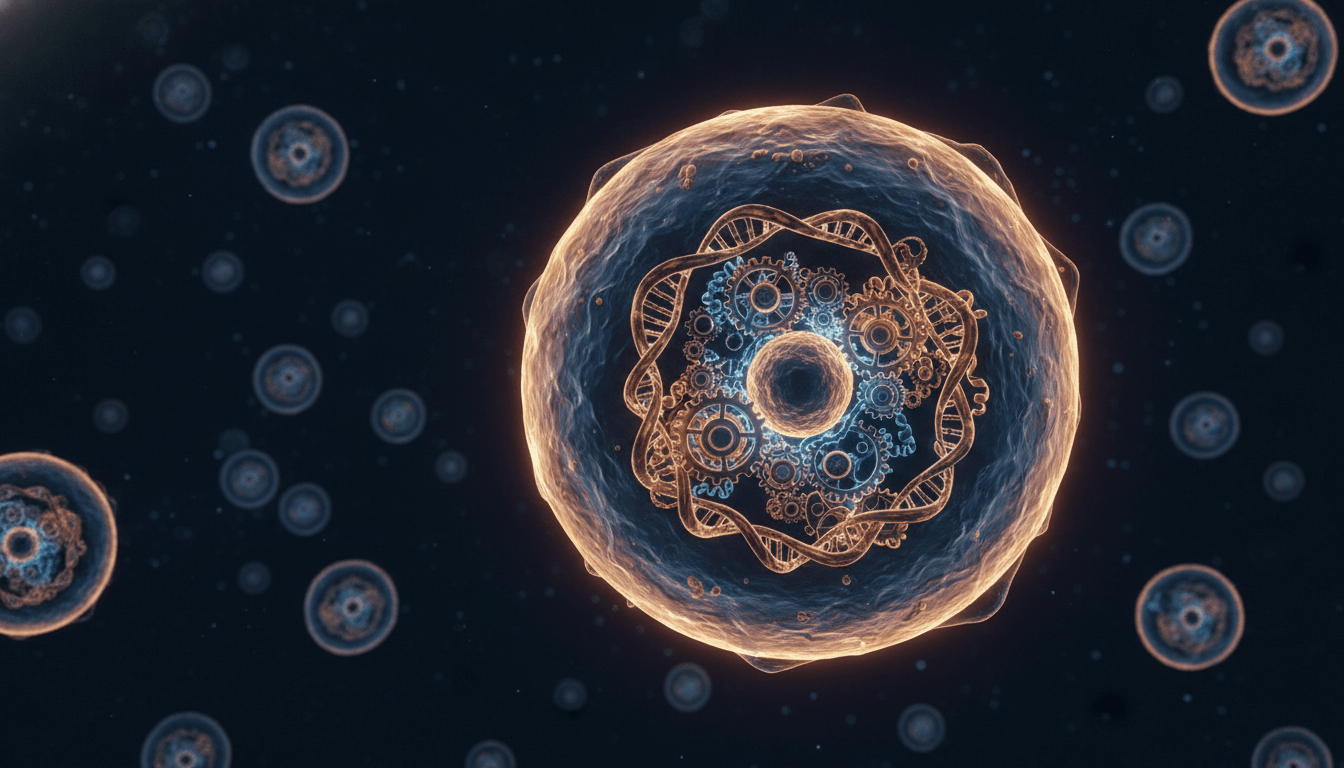
Every cell in your body knows what time it is. Not because it checks a clock. Because it is a clock.
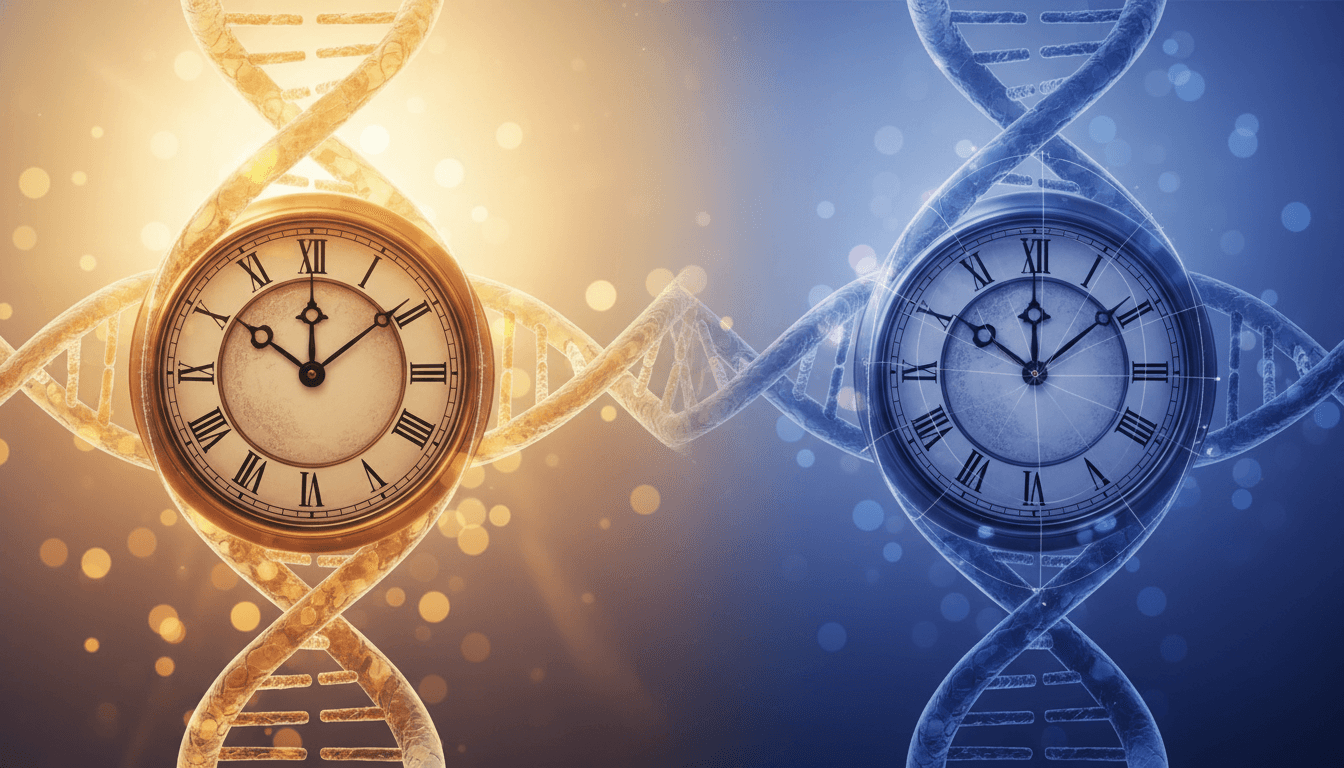
In 2017, the Nobel Prize in Physiology or Medicine went to three Americans for figuring out how. Jeffrey Hall and Michael Rosbash at Brandeis, Michael Young at Rockefeller. They spent decades picking apart the gears inside a fruit fly's cells. The same mechanism runs in your liver, skin, gut lining, white blood cells. Almost every cell in your body runs the same ancient timing program.
It comes down to a feedback loop. Proteins build up, shut off their own production, degrade. Cycle starts over. Twenty-four hours. Every time.
The Loop
Here's how it works in mammals.
Two proteins called CLOCK and BMAL1 pair up and act like an on switch. They bind to DNA and activate a set of genes called Period (PER1, PER2, PER3) and Cryptochrome (CRY1, CRY2). Those genes get transcribed into messenger RNA, then translated into PER and CRY proteins in the cytoplasm.
Now the twist. PER and CRY accumulate, find each other, form a complex, travel back into the nucleus, and grab CLOCK:BMAL1. They shut it down. The proteins CLOCK and BMAL1 created come back and silence them.
Production stops. But PER and CRY aren't stable. They slowly degrade. As their levels drop, the grip on CLOCK:BMAL1 loosens. The on switch flips again. New PER and CRY start building. The whole thing repeats.
One complete cycle: roughly 24 hours. Not a metaphor. An actual physical loop of protein production and destruction happening in billions of cells at once.
Cracking the Code in Flies
Hall and Rosbash cloned the Period gene in 1984. Six years later they proposed the model that would win the Nobel. An autoregulatory feedback loop. A gene makes a protein that inhibits itself. Simple on paper. Revolutionary in practice.
Young's lab at Rockefeller added the missing pieces. In 1994 his team found the timeless gene, which encodes a partner protein PER needs to function. Then came doubletime, a kinase gene that controls how fast PER degrades. The speed dial. It doesn't change what the clock does. It changes how fast it ticks.
That dial matters more than you'd think.
When the Speed Dial Breaks
In humans, the equivalent of doubletime encodes a kinase called CK1δ. In 2001, Ying-Hui Fu's lab at UCSF identified a family with a mutation that caused Familial Advanced Sleep Phase Syndrome. Every affected family member fell asleep around 7:30 PM and woke at 4:30 AM. Not by choice. Not from habit. A single amino acid change in one gene.
Toh and colleagues from Fu's group later showed the same syndrome can come from a mutation in PER2 itself. The mutation altered a phosphorylation site on the protein. PER2 degraded faster. The loop ran quicker. The sleep-wake cycle shifted hours earlier.
One mutation. One protein degrading slightly faster. Your entire behavioral schedule moves.
The molecular clock doesn't vaguely influence when you feel sleepy. It governs it. Change one gear and the whole machine runs at a different speed.
From Flies to Mammals
A reasonable objection existed for years. Maybe the fly clock was just a fly thing. Insects are weird.
Joseph Takahashi at UT Southwestern answered that in 1997. His lab ran a forward genetics screen in mice and found one whose internal clock stretched to 28 hours, then fell apart entirely. The mouse went arrhythmic.
The gene, published in Cell by King and Takahashi's team, turned out to be the mammalian version of CLOCK. Same core component Hall and Rosbash had been studying in flies. Conserved across hundreds of millions of years.
It's like finding a critical function in your codebase copied from an ancient library that ran before your framework existed, and it still runs identically. Evolution found a timing solution in some early multicellular ancestor and kept deploying it.
Not Just the Brain
When Moore and Eichler showed in 1972 that destroying the suprachiasmatic nucleus (SCN) in rats eliminated their cortisol rhythm, the assumption was that the body's clock lived in the brain. One master clock running everything.
But the molecular clock isn't just in the SCN. It's everywhere.
Satchidananda Panda's lab published a landmark Cell paper in 2002 showing the circadian clock drives the rhythmic expression of hundreds of genes in mouse liver and heart. Between 8 and 10 percent of all genes in those tissues cycled on a 24-hour rhythm. Metabolism, DNA repair, cell division, immune response.
Stokkan, Yamazaki, and Menaker showed in 2001 in Science that you could reset the liver clock independently of the brain clock just by changing when the animal ate. Feed a mouse at the "wrong" time and the liver shifts to match the food while the SCN stays locked to light.
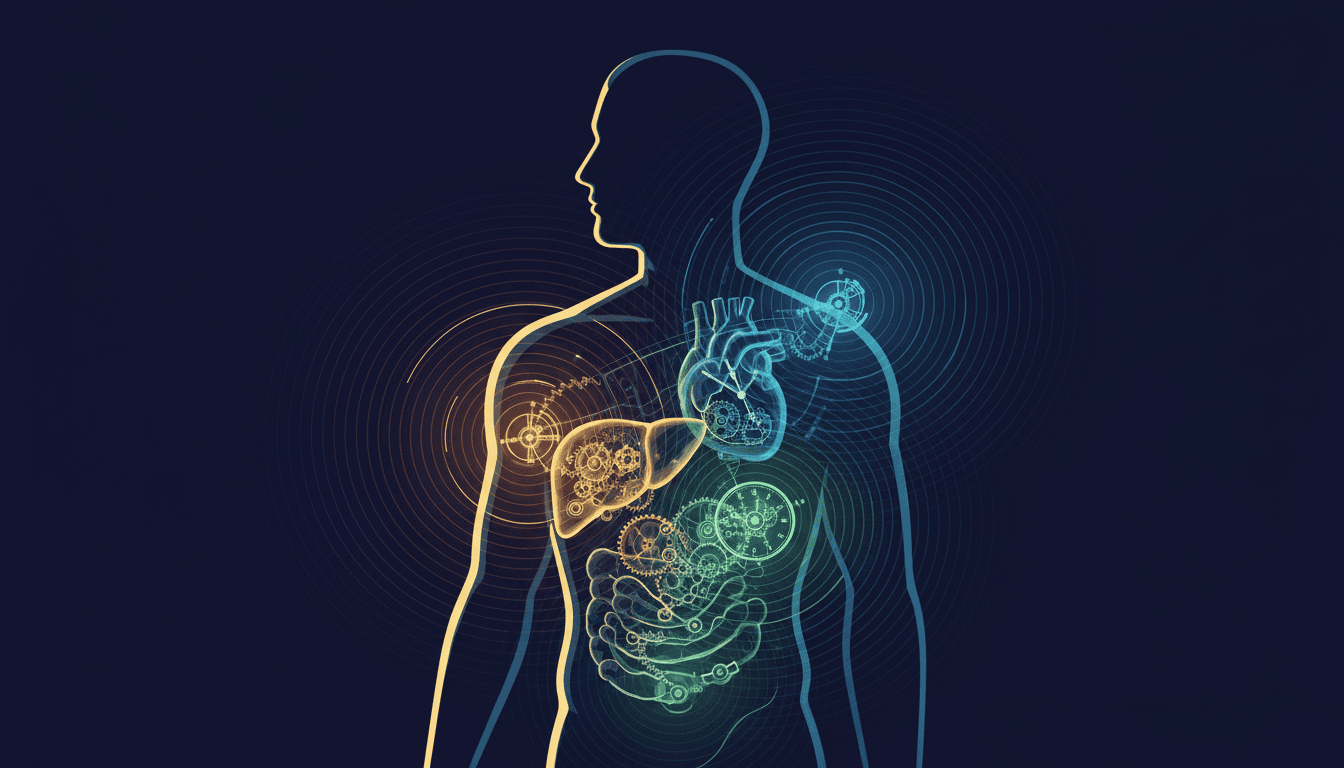
Your liver has its own clock. Your gut has its own. Your skin has its own. All running the same molecular loop (CLOCK, BMAL1, PER, CRY) but they can fall out of sync.
The SCN takes its signal from light through specialized retinal cells containing melanopsin, identified by Hattar and by Berson, Dunn, and Takao in back-to-back 2002 Science papers. Light sets the master clock. Peripheral clocks listen to food timing, exercise, temperature, stress hormones.
When those signals conflict (eating at midnight, sleeping during the day, bright screens after dark) the clocks desynchronize. Not metaphorically. The actual molecular loops in different tissues peak at different times.
Billions of Clocks, One Schedule
Shift work causing metabolic disease isn't just "bad sleep." It's the liver clock running six hours behind the brain clock while the gut clock is somewhere in between. Insulin when cells aren't ready. Cortisol when it should be falling. DNA repair enzymes peaking when cell division is at its highest.
The feedback loop Hall, Rosbash, and Young decoded in fruit flies runs in nearly every cell in your body. Same proteins. Same 24-hour cycle. Each copy pushed by different signals.
You don't have a clock. You have billions of them. And they're only as useful as they are synchronized.
Sources
- Loss of a Circadian Adrenal Corticosterone Rhythm Following Suprachiasmatic Lesions in the Rat (Moore & Eichler, 1972, Brain Research) (opens in new tab)
- Circadian Rhythms in Drinking Behavior and Locomotor Activity of Rats Are Eliminated by Hypothalamic Lesions (Stephan & Zucker, 1972, PNAS) (opens in new tab)
- Genetics and Molecular Biology of Rhythms in Drosophila and Other Insects (Hall & Rosbash, 2003, Advances in Genetics) (opens in new tab)
- The Molecular Control of Circadian Behavioral Rhythms and Their Entrainment in Drosophila (Young, 1998, Annual Review of Biochemistry) (opens in new tab)
- An hPer2 Phosphorylation Site Mutation in Familial Advanced Sleep Phase Syndrome (Toh et al., 2001, Science) (opens in new tab)
- Positional Cloning of the Mouse Circadian Clock Gene (King, Takahashi et al., 1997, Cell) (opens in new tab)
- Coordinated Transcription of Key Pathways in the Mouse by the Circadian Clock (Panda et al., 2002, Cell) (opens in new tab)
- Entrainment of the Circadian Clock in the Liver by Feeding (Stokkan, Yamazaki, Menaker et al., 2001, Science) (opens in new tab)
- Melanopsin-Containing Retinal Ganglion Cells: Architecture, Projections, and Intrinsic Photosensitivity (Hattar et al., 2002, Science) (opens in new tab)
- Phototransduction by Retinal Ganglion Cells That Set the Circadian Clock (Berson, Dunn, Takao, 2002, Science) (opens in new tab)
- The Nobel Prize in Physiology or Medicine 2017 (NobelPrize.org) (opens in new tab)
Part of the Body Clock series. Previous: Twenty Thousand Neurons That Run Your Life. Next: Your Liver Doesn't Know What Time Zone You're In.