Your Chronotype Isn't a Choice: You're Being Punished for Your Genetics
Whether you're a morning person or night owl is written into your DNA. Society treats one as virtuous and the other as lazy. The science says that's discrimination.

Justin Angeles
· 8 min read
"Early to bed, early to rise, makes a man healthy, wealthy, and wise." Benjamin Franklin wrote that in 1735. Nearly 300 years later, we still treat it as moral truth.
It's not. It's genetic prejudice dressed up as a proverb.
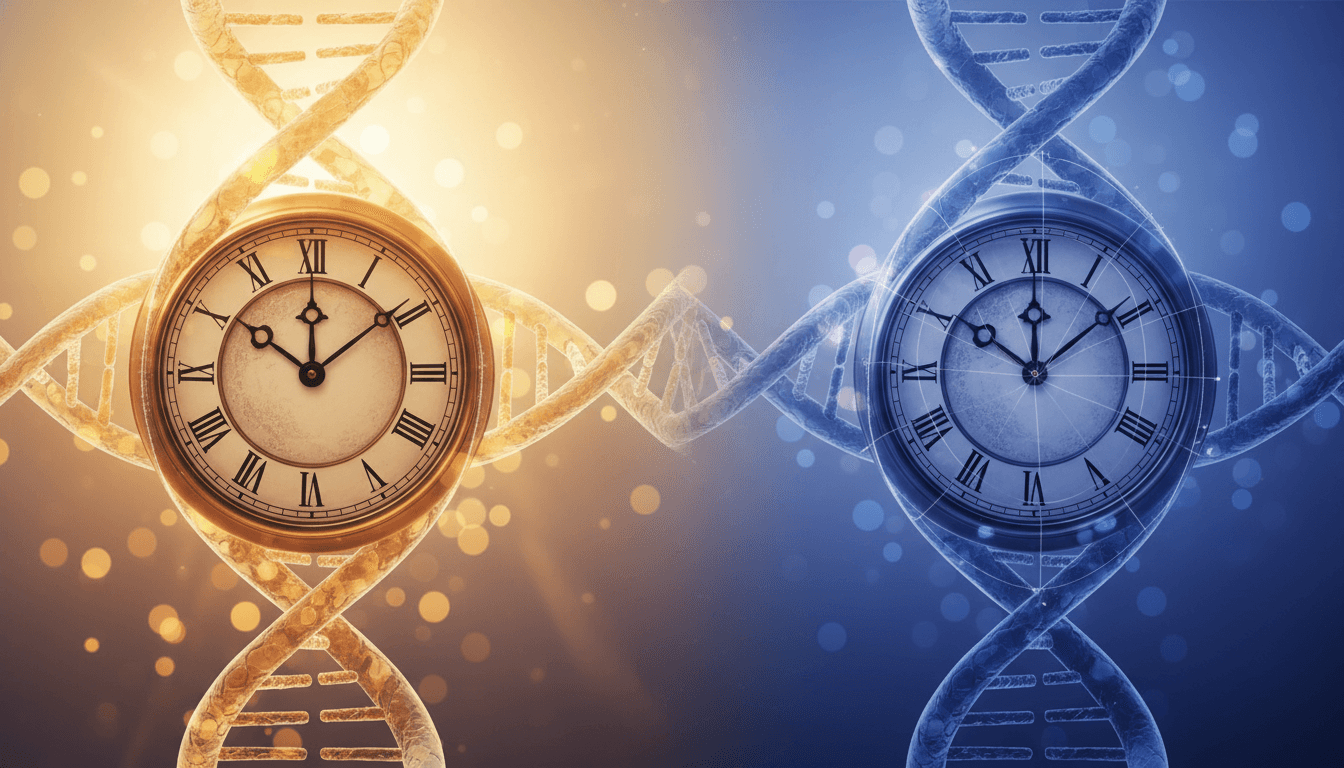
In 2019, Samuel Jones and colleagues analyzed DNA and sleep data from 697,828 UK Biobank participants and identified 351 genetic loci associated with chronotype. Many of those genes sit inside the core molecular clock or the retinal light-sensing pathways that entrain it.
351 locations in your genome. Not lifestyle choices. Not failures of discipline.
Whether you wake at 5:30 AM or can't fall asleep before 1 AM is substantially hardwired. Heritability runs 12% to 42%, comparable to BMI. Nobody calls overweight people lazy as policy. But we do exactly that to late chronotypes.
The Clock Genes Behind Your Wake Time
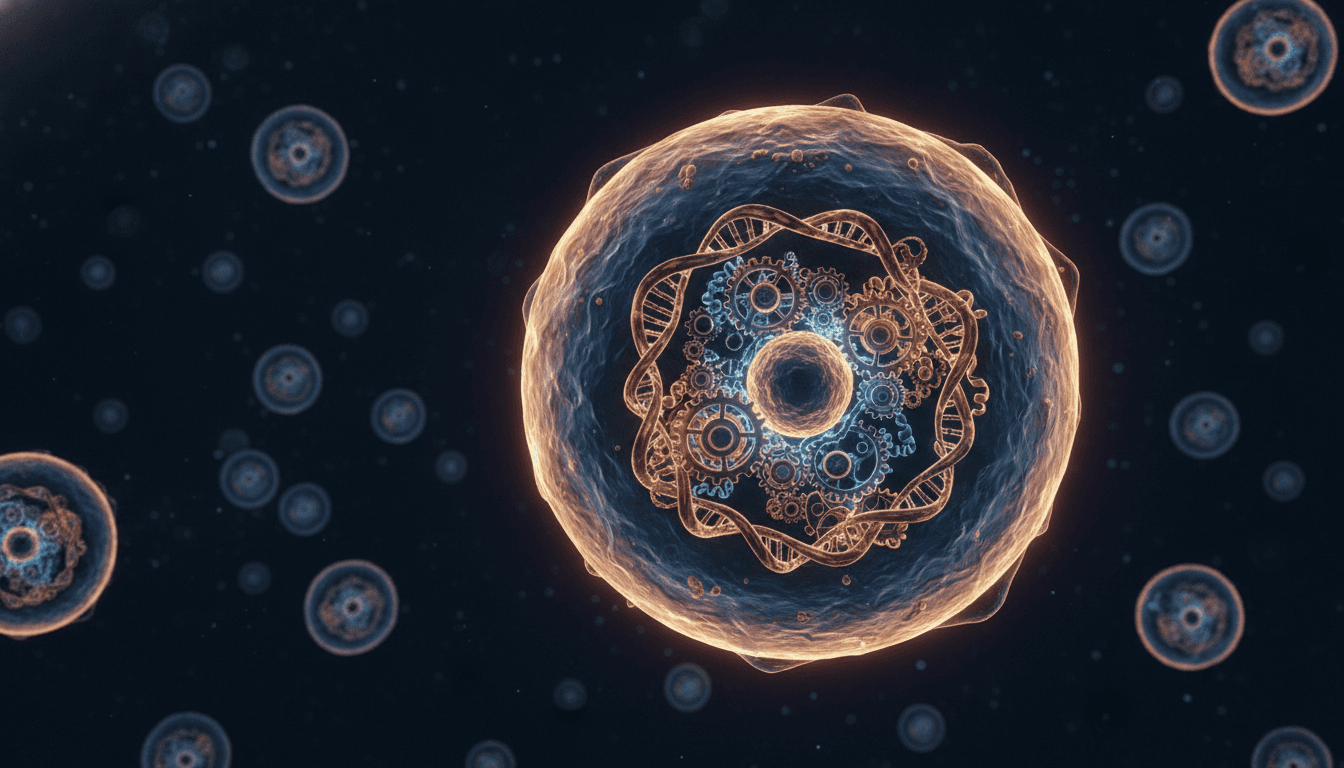
The molecular machinery that sets your internal time was first mapped in fruit flies. Jeffrey Hall, Michael Rosbash, and Michael Young spent decades identifying the period and timeless genes and the 24-hour feedback loop they form. They won the Nobel Prize for it in 2017.
The human versions of these genes do the same thing. Mutations produce dramatic results.
In 2001, Ying-Hui Fu's lab at UCSF identified a single point mutation in the hPer2 gene in a family with Familial Advanced Sleep Phase Syndrome. These people fall asleep around 7:30 PM and wake naturally at 4:30 AM. Not because they're disciplined. Because their clock protein gets phosphorylated faster than normal, shortening their entire circadian cycle.
One amino acid change. That's the difference between "admirable early riser" and "normal person."
Joseph Takahashi's lab took the opposite approach. They used forward genetics in mice, screening thousands of animals for abnormal circadian behavior, and found the Clock gene. The mutant mice ran long cycles, drifting later and later. Not lazy mice. Mice with a different allele.
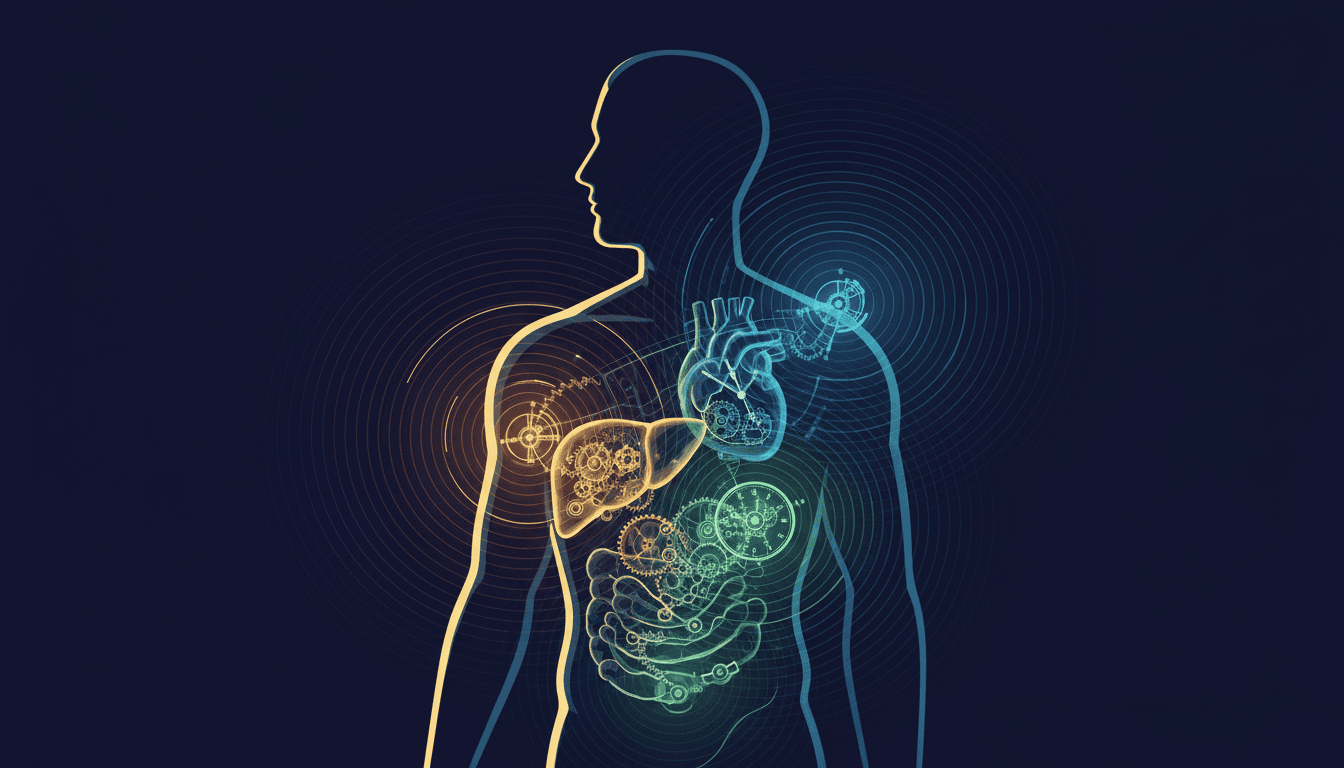
Your chronotype isn't just when you wake up. It's when your liver is ready to process food, when your immune system peaks, when your brain is primed for complex thought. Forcing a late chronotype into an early schedule doesn't just cost them sleep. It misaligns every downstream process in their body.
The Teenage Problem
Chronotype isn't fixed across your life. It shifts predictably with age, and the data on this is massive.
Till Roenneberg, creator of the Munich Chronotype Questionnaire, collected sleep timing data from tens of thousands of people across the lifespan. The pattern is consistent. Children are early chronotypes. During puberty, the clock shifts later. It peaks in lateness around age 19-20 for women and 21 for men. Roenneberg uses this peak as a biological marker for the end of adolescence. Then it gradually shifts earlier for the rest of life.
A 16-year-old forced to start school at 7:30 AM is being asked to perform cognitively demanding work at the equivalent of 5:30 AM for a middle-aged adult.
We know this. The data is overwhelming. We mostly ignore it.
The American Academy of Pediatrics recommended in 2014 that middle and high schools start no earlier than 8:30 AM. That was twelve years ago.
Kyla Wahlstrom studied 9,000 students across 8 high schools in 3 states. When start times shifted from 7:35 AM to 8:55 AM, students got an extra hour of sleep on average. Car crashes among 16-to-18-year-olds dropped by 65%. Attendance improved. Tardiness dropped. Grades went up.
In 2018, Gideon Dunster's Science Advances study tracked Seattle public school students after the district delayed start times by 55 minutes. Students slept 34 minutes longer. Tardiness decreased. Grades improved 4.5%.
Sixty-five percent fewer car crashes. That's not an educational debate. That's a public safety emergency we're ignoring because adults don't want to adjust their commutes.
The Discrimination Nobody Talks About
Christoph Randler's 2009 study in the Journal of Applied Social Psychology found morning types scored higher on proactivity. Headlines wrote themselves. "Morning people are more successful!"
But the assessments were given during morning hours. When researchers controlled for testing time, matching tasks to each person's chronotype, the gap disappeared. In some cases it reversed, with evening types outperforming on creativity and complex reasoning.
The entire "morning people are better" narrative is an artifact of a society that tests, evaluates, and rewards on a morning schedule.
Job interviews at 9 AM. School exams at 8 AM. Performance reviews reflecting 9-to-5 output. Medical appointments default to morning slots. Corporate culture valorizes the person who's "in the office early" and side-eyes the person doing their best work from 10 AM to 7 PM.
Roughly 25% of the population runs two or more hours later than the societal default. They're not lazy. Their clock genes are set to a different time, and the world penalizes them for it.
Celine Vetter's 2015 study in Current Biology showed shift workers assigned schedules that matched their chronotype slept better, had less circadian disruption, and performed better. The fix wasn't making people change. It was making the schedule fit the person.
The Mental Health Connection
Laura Lyall's 2018 study in The Lancet Psychiatry used accelerometer data from over 91,000 UK Biobank participants. Greater circadian disruption was significantly associated with major depression, bipolar disorder, lower wellbeing, greater mood instability, higher neuroticism, and worse cognitive function.
The core clock genes identified by Hall, Rosbash, and Young in flies have human homologs directly implicated in psychiatric conditions. Colleen McClung's 2007 review showed circadian gene mutations in mice produce behaviors that mirror mania, depression, and anxiety. Francesco Benedetti found that morning light treatment accelerated the antidepressant effect of citalopram. The treatment wasn't a new drug. It was aligning the patient's biology with their clock.
Frank Scheer's 2009 PNAS study showed even short-term circadian misalignment produces adverse metabolic and cardiovascular changes. Roenneberg's 2012 research linked the resulting "social jet lag" to obesity.
We're generating disease by treating genetic variation as a character flaw.
What Change Looks Like
The science isn't ambiguous. Chronotype is genetic. Forcing misalignment causes measurable harm. Flexible scheduling improves outcomes.
Schools that shifted start times later saw exactly what the research predicted. Better grades. Fewer crashes. Improved mental health. Most haven't, because the logistics inconvenience adults.
Companies that moved toward flexible core hours found late chronotypes weren't lazy. They were productive. Just on a different schedule.
Russell Foster argues that chronotype-aware scheduling should be as standard as accommodating other biological differences. Satoshi Panda makes the same case in The Circadian Code. The research exists. The recommendations exist.
Growing up in Alaska, I felt the clock in my bones. Summer meant near-constant daylight. Winter meant waking and coming home from school in darkness. Light is the primary signal that entrains your master clock, and when that signal swings from 22 hours to 4 hours across the year, you don't get to pretend it doesn't matter.
I've always been more of a night person. For most of my life I assumed that was a flaw. Something to fix. Now I know it's 351 genetic loci doing exactly what they were designed to do.
The question isn't how to turn night owls into morning people. The question is why we built a society that demands it.
Sources
- Genome-Wide Association Analyses of Chronotype in 697,828 Individuals (Jones et al., 2019, Nature Communications) (opens in new tab)
- An hPer2 Phosphorylation Site Mutation in Familial Advanced Sleep Phase Syndrome (Toh et al., 2001, Science) (opens in new tab)
- Positional Cloning of the Mouse Circadian Clock Gene (King, Takahashi et al., 1997, Cell) (opens in new tab)
- Coordinated Transcription of Key Pathways by the Circadian Clock (Panda et al., 2002, Cell) (opens in new tab)
- Genetics and Molecular Biology of Rhythms in Drosophila and Other Insects (Hall, 2003, Advances in Genetics) (opens in new tab)
- The Molecular Control of Circadian Behavioral Rhythms in Drosophila (Young, 1998, Annual Review of Biochemistry) (opens in new tab)
- Examining the Impact of Later High School Start Times (Wahlstrom et al., 2014, University of Minnesota) (opens in new tab)
- Sleepmore in Seattle: Later School Start Times (Dunster et al., 2018, Science Advances) (opens in new tab)
- Association of Disrupted Circadian Rhythmicity with Mood Disorders (Lyall et al., 2018, The Lancet Psychiatry) (opens in new tab)
- Circadian Genes, Rhythms and the Biology of Mood Disorders (McClung, 2007, Pharmacology & Therapeutics) (opens in new tab)
- Morning Light Treatment Hastens Antidepressant Effect of Citalopram (Benedetti et al., 2003, Journal of Clinical Psychiatry) (opens in new tab)
- Adverse Metabolic and Cardiovascular Consequences of Circadian Misalignment (Scheer et al., 2009, PNAS) (opens in new tab)
- Social Jetlag and Obesity (Roenneberg et al., 2012, Current Biology) (opens in new tab)
- Aligning Work and Circadian Time in Shift Workers (Vetter et al., 2015, Current Biology) (opens in new tab)
- Melanopsin-Containing Retinal Ganglion Cells (Hattar et al., 2002, Science) (opens in new tab)
- Phototransduction by Retinal Ganglion Cells That Set the Circadian Clock (Berson, Dunn & Takao, 2002, Science) (opens in new tab)
- Roenneberg T. Internal Time: Chronotypes, Social Jet Lag, and Why You're So Tired (2012, Harvard University Press)
- Panda S. The Circadian Code (2018, Rodale Books)
- Foster R, Kreitzman L. Circadian Rhythms: A Very Short Introduction (2017, Oxford University Press)
Part of the Body Clock series. Previous: When You Eat Matters More Than What You Eat. Next: Your Broken Clock Is Breaking Your Mind.