Your Liver Doesn't Know What Time Zone You're In
Every organ in your body keeps its own time. When those clocks disagree, the consequences go far beyond feeling tired.

Justin Angeles
· 8 min read
You don't have a body clock. You have billions of them.
For decades, scientists assumed the suprachiasmatic nucleus was the clock. The one timekeeper. A tiny cluster of 20,000 neurons in the hypothalamus, taking light from the eyes and telling the rest of the body what time it was.
Then in 2000, Ueli Schibler's group at the University of Geneva blew the whole model apart. They took fibroblasts, basic connective tissue cells, grew them in a dish, and hit them with a serum shock. The cells started oscillating. On their own. With no brain attached. No SCN. No light input. Just cells in a petri dish, ticking away on a near-24-hour cycle for days.
Every cell in your body has a clock.
The Tissue Problem
Satchin Panda's lab at the Salk Institute published a study in Cell in 2002 that quantified what this means. Roughly 8 to 10 percent of all mammalian genes show circadian oscillation in their expression. That's thousands of genes turning on and off in daily rhythms.
Which genes cycle depends on where they are.
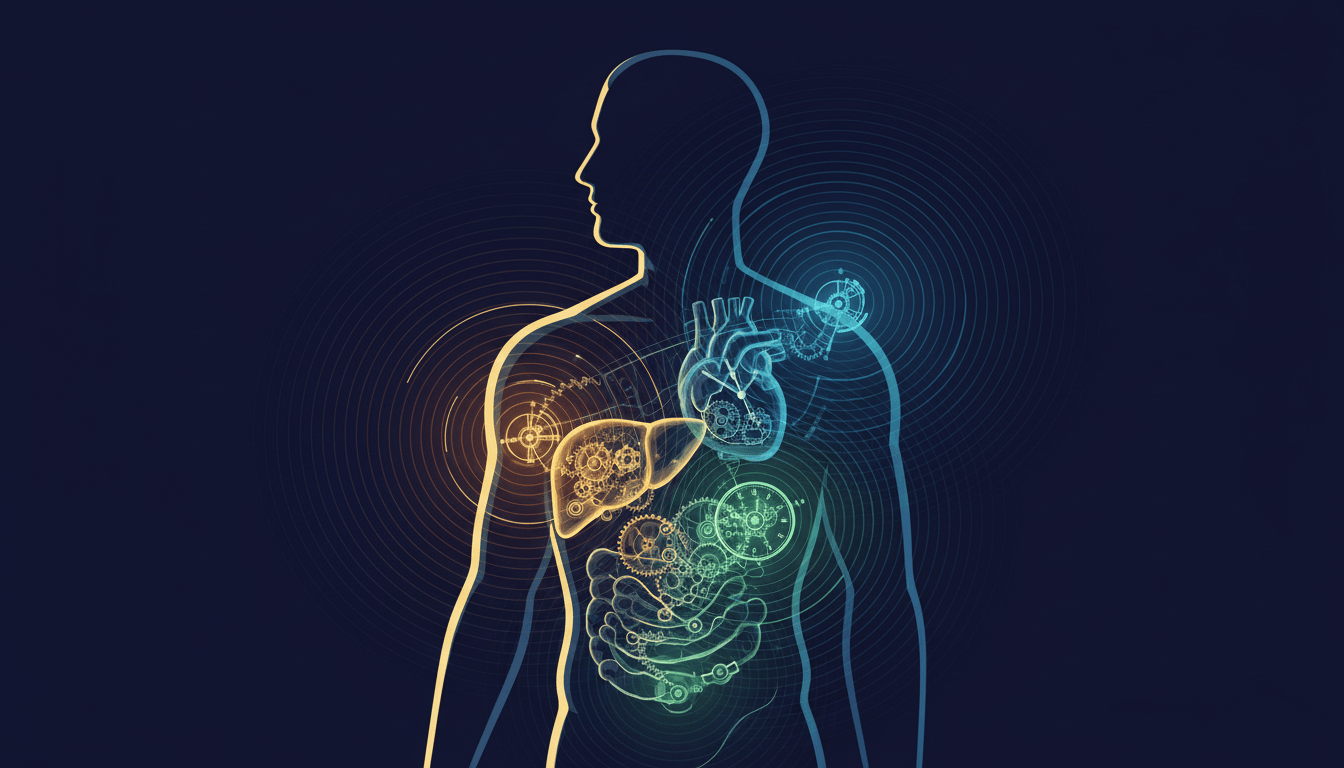
The liver clock drives rhythms in metabolic genes. The heart clock cycles ion channel genes that control cardiac rhythm. The gut clock times digestive enzyme production. The pancreas clock regulates insulin sensitivity. Each organ is running its own temporal program, optimized for when it expects to work hardest.
Your liver peaks its metabolic activity when it expects you to eat. Your muscles peak their glucose uptake when it expects you to move. Your gut ramps up enzyme production before the meal it anticipates based on yesterday's timing.
This is not one clock telling every organ what to do. This is an orchestra where every section reads its own sheet music.
The Hierarchy
The system works because it's hierarchical.
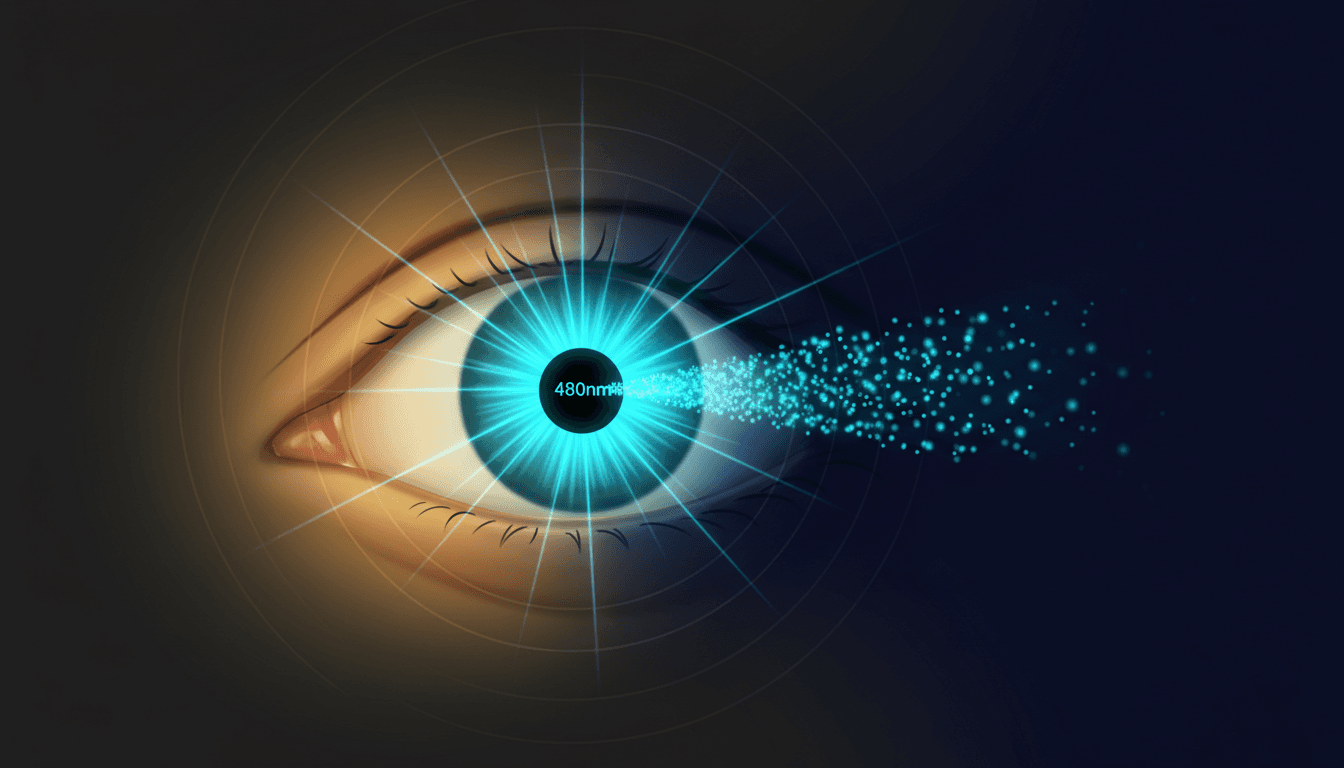
The SCN sits at the top. It receives light information from specialized retinal ganglion cells (the melanopsin cells identified by Berson, Dunn, and Takao at Brown University in 2002 and by Samer Hattar's group that same year). Light data comes in. The SCN synchronizes. Then it sends timing signals outward through two channels. Neural connections and hormones. Cortisol rises in the morning. Melatonin rises at night. These signals ripple through every tissue.
But peripheral clocks don't just listen to the SCN. They also respond to local cues. The liver cares about when you eat. Muscles care about when you move. The gut cares about both. These local signals, what researchers call "zeitgebers" (German for "time givers"), can be just as powerful as the central clock signal.
This creates a problem.
When the Clocks Disagree
Paolo Sassone-Corsi, working at UC Irvine until his death in 2020, demonstrated something disturbing. Take a nocturnal mouse. It eats at night, sleeps during the day. Its SCN and peripheral clocks are all synchronized. Now feed that mouse only during the day.
Within days, the liver clock inverts. It shifts its entire metabolic program to match the new feeding time. The SCN doesn't budge. It's still locked to the light-dark cycle.
The mouse now has two master timelines running simultaneously.
Stokkan and colleagues at the University of Virginia (working with Michael Menaker) published similar findings in Science in 2001, showing that feeding schedules alone could entrain the liver clock independent of the SCN. The food signal overrode the light signal at the organ level.
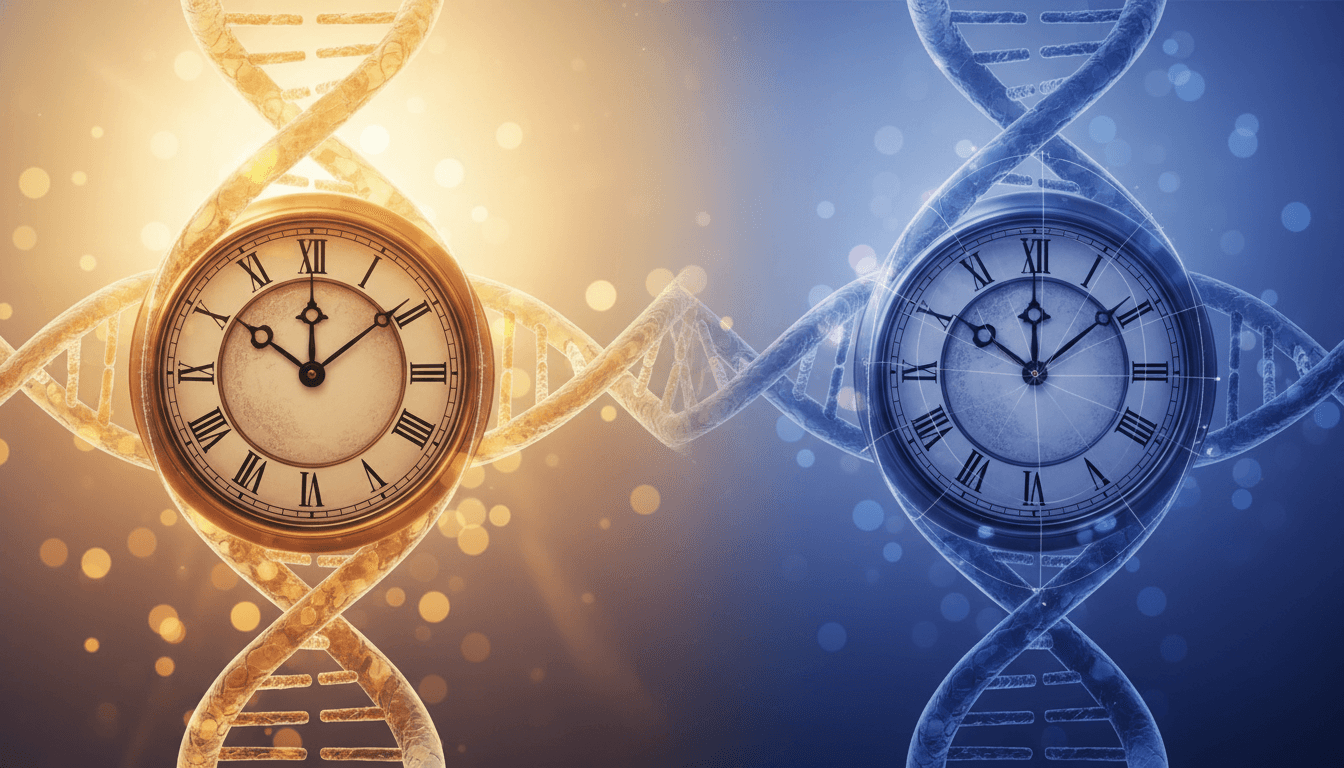
Researchers call this "internal desynchronization." Your brain thinks it's one time. Your liver thinks it's another. Your gut is somewhere in between.
This is what jet lag actually is.
The Jet Lag You Already Have
When you fly from New York to Tokyo, your SCN resets to the new light-dark cycle within about 1 to 2 days. Charles Czeisler's group at Harvard established in 1999 that the human circadian pacemaker runs at 24.18 hours on average. Tight precision. It locks onto new light signals quickly.
Your peripheral clocks don't follow that fast. The liver takes 5 to 8 days. The gut takes its own sweet time. The muscles adjust at yet another rate.
For those transition days, your brain is in Tokyo while your liver is still in New York.
But you don't need to fly anywhere to experience this.
Till Roenneberg at Ludwig Maximilian University of Munich coined the term "social jet lag" to describe the gap between your biological clock and your social schedule. His 2012 study in Current Biology found that this mismatch correlates directly with obesity, even after controlling for sleep duration. It's not just about how much you sleep. It's about when your clocks agree.
Think about a typical weekday. You wake at 6:30am to an alarm (overriding your SCN's preferred wake time). You eat breakfast at 7am. You eat lunch at noon because that's when the break is, not because your gut is ready. You eat dinner at 9pm because the day got away from you. You look at bright screens until midnight.
Your SCN is getting "it's still daytime" signals at 11pm. Your liver got its last food signal four hours ago and thinks the day is winding down. Your gut got three meals at irregular intervals that don't match yesterday. Your muscles haven't moved all day.
Every organ is running on a slightly different schedule. Not because of a transatlantic flight. Because of Tuesday.
The Consequences Are Not Subtle
Frank Scheer's group at Harvard published a landmark paper in PNAS in 2009. They put healthy adults on a 28-hour day cycle, impossible for the circadian system to track, forcing misalignment between central and peripheral clocks.
Within days, the subjects showed decreased leptin (the hormone that tells you you're full), increased glucose levels, inverted cortisol rhythms, and increased blood pressure. Three of them became pre-diabetic. In less than two weeks.
These weren't shift workers with decades of disruption. These were healthy people whose clocks disagreed for a few days.
Gan and colleagues published a meta-analysis in Occupational and Environmental Medicine in 2015, pooling data from 12 studies covering over 226,000 participants. Shift work, which chronically desynchronizes internal clocks, was associated with a 9% increased risk of type 2 diabetes. Rotating shifts (the worst for clock alignment) carried even higher risk.
Eva Schernhammer's group reported in 2001 that women working rotating night shifts for 30+ years had a 36% increased risk of breast cancer. In 2019, the International Agency for Research on Cancer classified night shift work as a probable carcinogen.
Your organs being on different schedules isn't just uncomfortable. It's pathogenic.
The Fix That Isn't Sleep
You can get 8 hours of sleep and still have desynchronized clocks. Sleep duration is not the same as circadian alignment. If your sleep window doesn't match your light exposure pattern, which doesn't match your eating pattern, which doesn't match your activity pattern, your clocks are still arguing with each other.
Satchin Panda's lab demonstrated this directly. In 2012, Megumi Hatori and colleagues in Panda's group published a study in Cell Metabolism showing that mice on a high-fat diet who were restricted to eating within an 8-hour window were protected from obesity, diabetes, and liver disease. Mice eating the exact same diet, same calories, spread across the day, got sick.
The food was identical. The timing changed everything.
In 2015, Panda's group (Gill and Panda) used a smartphone app to track real human eating patterns and found that most people eat across a 15-hour window or longer. When they restricted participants to a 10-hour eating window for 16 weeks, the subjects lost weight, slept better, and reported more energy. Without changing what they ate.
Daniela Jakubowicz's group published findings in Obesity in 2013 showing that women eating more calories at breakfast versus dinner lost significantly more weight, even with identical total intake. The liver clock expected the big meal in the morning. When it got one, everything ran smoother.
Kenneth Wright's group at the University of Colorado published a study in Current Biology in 2013. A week of camping. Natural light only, no screens. That was enough to realign participants' circadian clocks by nearly two hours. Their melatonin onset shifted to match sunset. Their internal clocks agreed again.
No supplements. No sleep tracker. Just light at the right time and food at the right time.
Coding at Midnight, Chips at 1am
It's midnight. I'm coding with all the lights on, eating chips at 1am because I lost track of time. My SCN is getting a "broad daylight" signal from my monitor. My liver just got a "lunch" signal from the chips. My muscles haven't moved in six hours. Every system in my body is voting on what time it is, and none of them agree.
Modern life isn't just sleep-deprived. It's temporally incoherent. We send different time signals to different organs all day long, then wonder why we feel off even when we technically got enough sleep.
The body clock isn't one clock. It's a consensus system. And right now, for most of us, there is no consensus.
The next article in this series looks at what happens when this desynchronization becomes chronic, and why shift workers are essentially running a long-term experiment on the human body that we already know the results of.
Sources
- Coordinated Transcription of Key Pathways in the Mouse by the Circadian Clock (Panda et al., 2002, Cell) (opens in new tab)
- Entrainment of the Circadian Clock in the Liver by Feeding (Stokkan et al., 2001, Science) (opens in new tab)
- Melanopsin-Containing Retinal Ganglion Cells (Hattar et al., 2002, Science) (opens in new tab)
- Phototransduction by Retinal Ganglion Cells That Set the Circadian Clock (Berson et al., 2002, Science) (opens in new tab)
- Stability, Precision, and Near-24-Hour Period of the Human Circadian Pacemaker (Czeisler et al., 1999, Science) (opens in new tab)
- Adverse Metabolic and Cardiovascular Consequences of Circadian Misalignment (Scheer et al., 2009, PNAS) (opens in new tab)
- Social Jetlag and Obesity (Roenneberg et al., 2012, Current Biology) (opens in new tab)
- Shift Work and Diabetes Mellitus: A Meta-Analysis (Gan et al., 2015, Occupational and Environmental Medicine) (opens in new tab)
- Rotating Night Shifts and Risk of Breast Cancer (Schernhammer et al., 2001, JNCI) (opens in new tab)
- Carcinogenicity of Night Shift Work (IARC, 2019, The Lancet Oncology) (opens in new tab)
- Time-Restricted Feeding without Reducing Caloric Intake Prevents Metabolic Diseases (Hatori et al., 2012, Cell Metabolism) (opens in new tab)
- A Smartphone App Reveals Erratic Diurnal Eating Patterns (Gill & Panda, 2015, Cell Metabolism) (opens in new tab)
- High Caloric Intake at Breakfast vs. Dinner Differentially Influences Weight Loss (Jakubowicz et al., 2013, Obesity) (opens in new tab)
- Entrainment of the Human Circadian Clock to the Natural Light-Dark Cycle (Wright et al., 2013, Current Biology) (opens in new tab)
- The Circadian Code (Panda, 2018, Rodale Books) (opens in new tab)
- Internal Time: Chronotypes, Social Jet Lag, and Why You're So Tired (Roenneberg, 2012, Harvard University Press) (opens in new tab)
Part of the Body Clock series. Previous: The Molecular Gears: How a Single Cell Keeps Time. Next: Light Is a Drug You Take Through Your Eyes.